Tag: Andalusia travel

  • Ronda, Spain Dramatic Cliffs and Andalusian Views

    Ronda, Spain Dramatic Cliffs and Andalusian Views

    Ronda, Spain dramatic cliffs and Andalusian views come together in a city that feels bold, elevated, and unforgettable from the first glimpse of its setting. Perched above a deep gorge in the hills of Andalusia, Ronda combines whitewashed streets, historic stone bridges, mountain light, and a strong sense of old Spain without feeling static or overly polished. It is one of those places where geography does much of the storytelling. The cliffs shape the city’s identity, but the atmosphere, architecture, and slower rhythm are what make people want to stay longer.

    Why Ronda Feels So Distinct

    Some towns in southern Spain win people over through charm alone. Ronda does something more dramatic. It feels suspended between earth and sky. The gorge at its center gives the city immediate visual power, and that power influences everything around it. Streets, viewpoints, plazas, and buildings all seem to exist in conversation with the landscape.

    That is what makes Ronda so memorable. It is beautiful, but not delicate. Historic, but not sleepy. The city feels shaped by altitude, stone, and distance, which gives it a stronger emotional presence than many other Andalusian destinations. Travelers who like places with both atmosphere and physical drama often connect with Ronda immediately.

    A City Defined by Its Setting

    Ronda’s geography is its first great strength. The city rises above the El Tajo gorge, and that dramatic break in the land gives it one of the most recognizable settings in Spain. Few places feel so clearly formed by topography. The gorge does not sit outside the city as a scenic extra. It runs through the heart of the experience.

    This matters because it gives Ronda more than postcard appeal. The setting changes how the city feels. There is openness, height, and a slight sense of tension in the air. Viewpoints do not feel ornamental. They feel essential. You are constantly aware of edges, distance, and the wider Andalusian landscape stretching beyond the town.

    The Bridge and the Drama of Stone

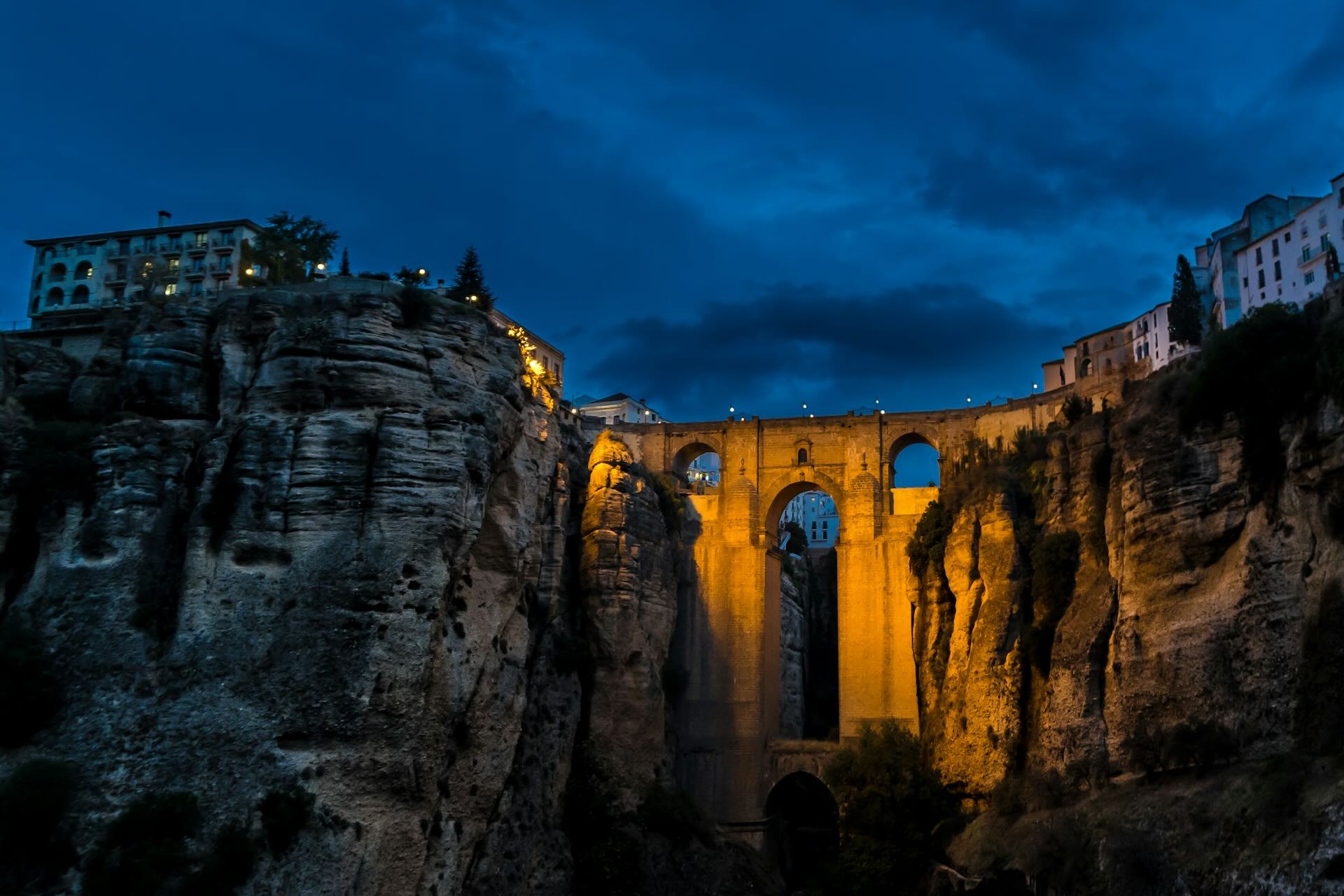
    Ronda’s most famous image is the bridge spanning the gorge, and it earns that status. The structure feels monumental, but also deeply tied to the city around it. It is not just a landmark to photograph. It is the visual and emotional hinge of the town.

    What makes it so compelling is the way stone meets emptiness. The bridge connects two sides of Ronda, but it also emphasizes the scale of the gap beneath it. That contrast gives the city a rare kind of architectural drama. The bridge is powerful because it feels necessary, not decorative. It expresses the reality of the landscape as much as the ambition of those who built within it.

    Andalusian Beauty With More Edge

    Ronda shares many qualities with other beautiful towns in Andalusia. Whitewashed façades, tiled roofs, sunlit streets, and warm stone all contribute to the atmosphere. Yet Ronda feels sharper and more vertical than many of its regional counterparts. The beauty here comes with cliffs, shadows, and sudden openings into vast views.

    That difference is part of its appeal. Ronda has Andalusian grace, but it also has a more rugged spirit. It does not feel soft around the edges. Even its prettiest corners tend to carry a stronger sense of terrain and history. That gives the city depth and keeps it from becoming too easy or overly picturesque.

    A Town Made for Walking and Looking Out

    Ronda works best on foot. Walking allows you to experience the shifts between enclosed old streets and expansive viewpoints, between quiet residential corners and open plazas facing the landscape. The city’s scale makes it easy to explore without stress, but the terrain and changing perspectives keep it visually active.

    This is one of Ronda’s biggest strengths. You do not come only to see one bridge and move on. The town reveals itself through movement. A narrow lane may lead to a broad overlook. A church or small square may open toward the cliffs. The pleasure is not only in arrival, but in the transitions between one atmosphere and another.

    The Old Town and Layers of History

    Ronda’s historic center gives the city much of its texture. Narrow streets, older stone buildings, and traces of different periods all contribute to a place that feels layered rather than frozen in one era. The city carries Roman, Moorish, and later Spanish influences, and that layered past adds weight to the beauty of the setting.

    What makes this especially effective is that Ronda does not feel like a historical display. The old town still feels inhabited and real. There is enough everyday life in the streets, cafés, and public spaces to keep the city from becoming a stage set. That balance between heritage and presence is one reason the town lingers in memory.

    Views That Keep Expanding

    Ronda is one of those rare places where looking outward becomes part of the city’s rhythm. The views are not limited to one overlook. They appear again and again, toward the gorge, toward the hills, and across the wider Andalusian countryside. This repeated encounter with distance gives the city a larger emotional scale than its size would suggest.

    These views also shape the pace of a visit. Ronda invites stopping. It encourages long pauses, slow walks, and moments where the landscape becomes the main event. Travelers who enjoy cities with constant visual release often find Ronda especially satisfying because it never feels fully closed in.

    A Slower Andalusian Rhythm

    Despite its visual drama, Ronda is not frantic. The city still supports a slower style of travel. Long lunches, café stops, evening strolls, and time spent simply taking in the light all feel natural here. The town has enough beauty to sustain attention, but it also has the kind of pacing that allows you to settle into it rather than consume it quickly.

    This matters because Ronda works best when it is not rushed. It is easy to arrive for a short visit, but the city gives back more when you let its atmosphere sink in. The light changes. The views deepen. Streets that seemed quiet at first begin to show more personality. Ronda rewards patience.

    More Than a Scenic Stop

    It would be easy to describe Ronda only through its cliffs and views, but that would undersell it. The city has genuine character beyond the obvious scenery. Its streets, historic fabric, and strong sense of place give it more staying power than a simple viewpoint destination.

    That distinction is important. Some dramatic places impress quickly and fade just as fast. Ronda tends to stay with people because the setting and the city reinforce one another so well. The landscape gives it force, while the town itself gives it texture, memory, and human scale.

    When Ronda Feels Best

    Ronda works especially well when the weather supports walking and long periods outdoors. In these conditions, the interplay between streets, overlooks, and surrounding countryside becomes even more enjoyable. Clear days tend to sharpen the mountain views, while softer light can make the stone and white façades feel even more atmospheric.

    At the same time, Ronda does not depend only on perfect conditions. Its appeal comes from structure, elevation, and mood as much as from sunshine. The city has enough built beauty and emotional presence to remain compelling beyond its most photogenic moments.

    Who Ronda Is Best For

    Ronda suits travelers who appreciate dramatic settings, walkable historic towns, and destinations with strong visual identity. It works especially well for couples, solo travelers, and culturally curious visitors who want a place that feels romantic without becoming overly polished. It is also a strong fit for travelers looking for Andalusia beyond its largest and most obvious cities.

    This is not a place built around nonstop activity. It is built around atmosphere, views, and the kind of beauty that reveals itself gradually. That makes it especially rewarding for travelers who value quality of experience over quantity of sights.

    The Lasting Appeal of Ronda

    Ronda stays with people because the town and the landscape feel inseparable. The cliffs give it drama. The bridge gives it shape. The old streets give it texture. The Andalusian views give it scale. Nothing feels disconnected from the setting.

    That is what makes Ronda more than simply a beautiful stop in southern Spain. It feels like a city suspended between natural force and human craft, where every overlook, stone wall, and narrow street contributes to one coherent experience. For travelers who want beauty, height, and a destination with real emotional presence, Ronda remains one of the most unforgettable towns in Andalusia.

    Plan a trip to Ronda today.

  • 5 Days in Seville, Spain

    5 Days in Seville, Spain

    Seville moves to its own rhythm, and 5 days in Seville, Spain gives you time to feel it rather than rush it. This Andalusian capital blends Moorish architecture, flamenco tradition, late night dining, and sun washed plazas into a city that feels both intimate and theatrical.

    You do not come to Seville to check off sights quickly. You come to wander shaded streets, linger over tapas, and let evenings stretch long past midnight. Five days allows you to balance landmarks with local life and experience the city at the right pace.

    Why Five Days Works Perfectly in Seville

    Seville is compact but layered.

    Major landmarks sit within walking distance, yet each neighborhood has its own personality. Afternoon heat encourages rest, which naturally slows your itinerary.

    Five days lets you adapt to the Andalusian schedule. Mornings start gently, afternoons pause, and nights unfold slowly.

    This rhythm is part of the experience.

    Day One, The Historic Core and First Impressions

    Begin in the heart of the city.

    Visit the Seville Cathedral and climb La Giralda for panoramic views. The scale of the cathedral sets the tone for the city’s architectural ambition.

    Walk through the Santa Cruz neighborhood, where narrow lanes and hidden courtyards create shade and intimacy.

    Stop often. Seville rewards observation more than speed.

    End the evening with simple tapas near Plaza Nueva. Let your first night be relaxed and unhurried.

    Day Two, Real Alcázar and Garden Exploration

    Dedicate your second day to the Real Alcázar.

    Its intricate tile work, arches, and gardens reveal centuries of layered history. The blend of Islamic and Christian design reflects Andalusia’s complex past.

    Afterward, wander through nearby gardens and plazas. Seville’s orange trees and tiled benches create natural resting points.

    In the evening, attend a flamenco performance in a small venue. Flamenco feels most powerful in intimate settings where emotion is visible and immediate.

    Day Three, Triana and Local Culture

    Cross the Guadalquivir River into Triana.

    This neighborhood carries strong artisan traditions and a more local energy. Ceramic shops, small bars, and residential streets create contrast with the historic center.

    Have lunch along the river and watch daily life unfold.

    In the afternoon, explore contemporary art spaces or small galleries that highlight Seville’s evolving creative scene.

    Evening is for slow dining. Choose a place where conversation and shared plates take priority over speed.

    Day Four, Parks and Palaces

    Spend your fourth day exploring beyond the obvious landmarks.

    Visit Palacio de las Dueñas or Casa de Pilatos to see noble residences that reveal another side of Seville’s architectural story.

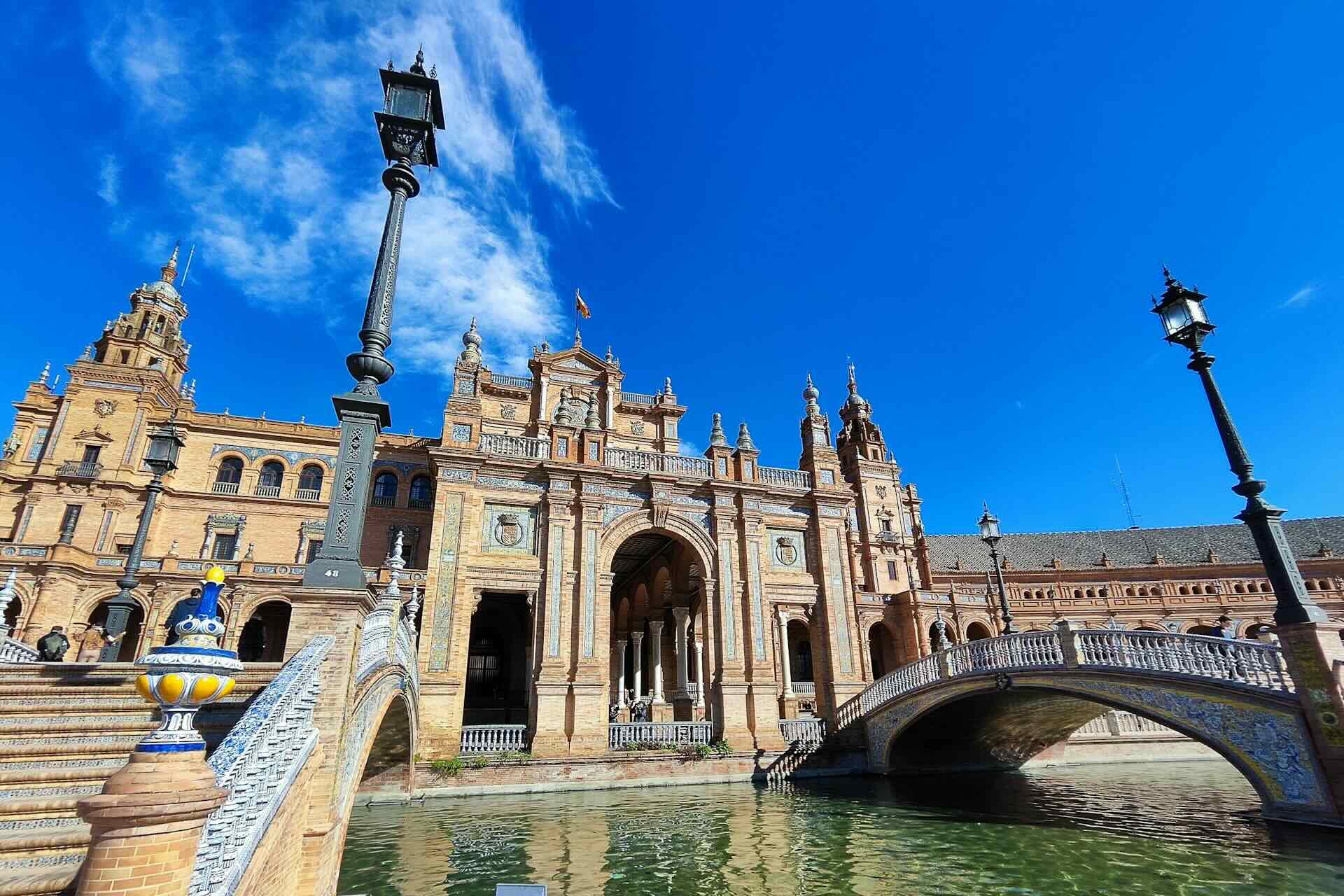
    Walk through Parque de María Luisa and Plaza de España. The scale and symmetry of Plaza de España feel cinematic, yet locals use the park for daily life.

    This balance between grandeur and normalcy defines Seville.

    Stay out for sunset. Warm light transforms facades and plazas into glowing backdrops.

    Day Five, Markets and Unstructured Wandering

    Your final day should feel flexible.

    Visit Mercado de Triana or another local market to experience everyday commerce. Fresh produce, cured meats, and regional specialties reflect Andalusian identity.

    Spend the afternoon wandering without direction. Sit in a shaded plaza. Order coffee. Observe the rhythm of conversation.

    Revisit a favorite street or café.

    Seville becomes more meaningful when you recognize familiar corners.

    What to Expect From Seville’s Pace

    Seville runs on a late schedule.

    Lunch stretches into mid afternoon. Dinner rarely begins before nine in the evening.

    Shops may close during the hottest hours.

    Adjusting to this timing improves the experience. Trying to impose a rigid schedule works against the city’s natural flow.

    Getting Around Seville

    Seville is highly walkable.

    Most major attractions sit within a compact radius. Streets are pedestrian friendly and filled with detail.

    Bicycles and trams supplement walking if needed, but much of the city is best experienced on foot.

    Walking reveals hidden courtyards and quiet corners you might otherwise miss.

    Best Time to Visit

    Spring and fall offer the most comfortable temperatures.

    Summer brings intense heat, which requires slower pacing and midday breaks.

    Winter remains mild compared to much of Europe and offers fewer crowds.

    Each season shifts the atmosphere slightly, but the city’s character remains consistent.

    Why Seville Feels Distinct

    Seville feels theatrical without feeling artificial.

    Architecture is ornate but lived in. Music and conversation spill into streets naturally.

    There is confidence in how the city presents itself. It does not try to impress. It simply exists fully in its identity.

    That authenticity is part of its appeal.

    How to Make the Most of Five Days

    Do not overschedule.

    Leave room for extended meals, unexpected conversations, and spontaneous detours.

    Choose quality over quantity.

    Five days in Seville is about immersion rather than intensity.

    Final Thoughts on 5 Days in Seville

    5 days in Seville, Spain offers enough time to move beyond sightseeing and into understanding.

    The city invites you to slow down, notice texture, and embrace warmth, both literal and social.

    When you align with its rhythm, Seville becomes less a destination and more a feeling.

    Plan a trip to Seville today.