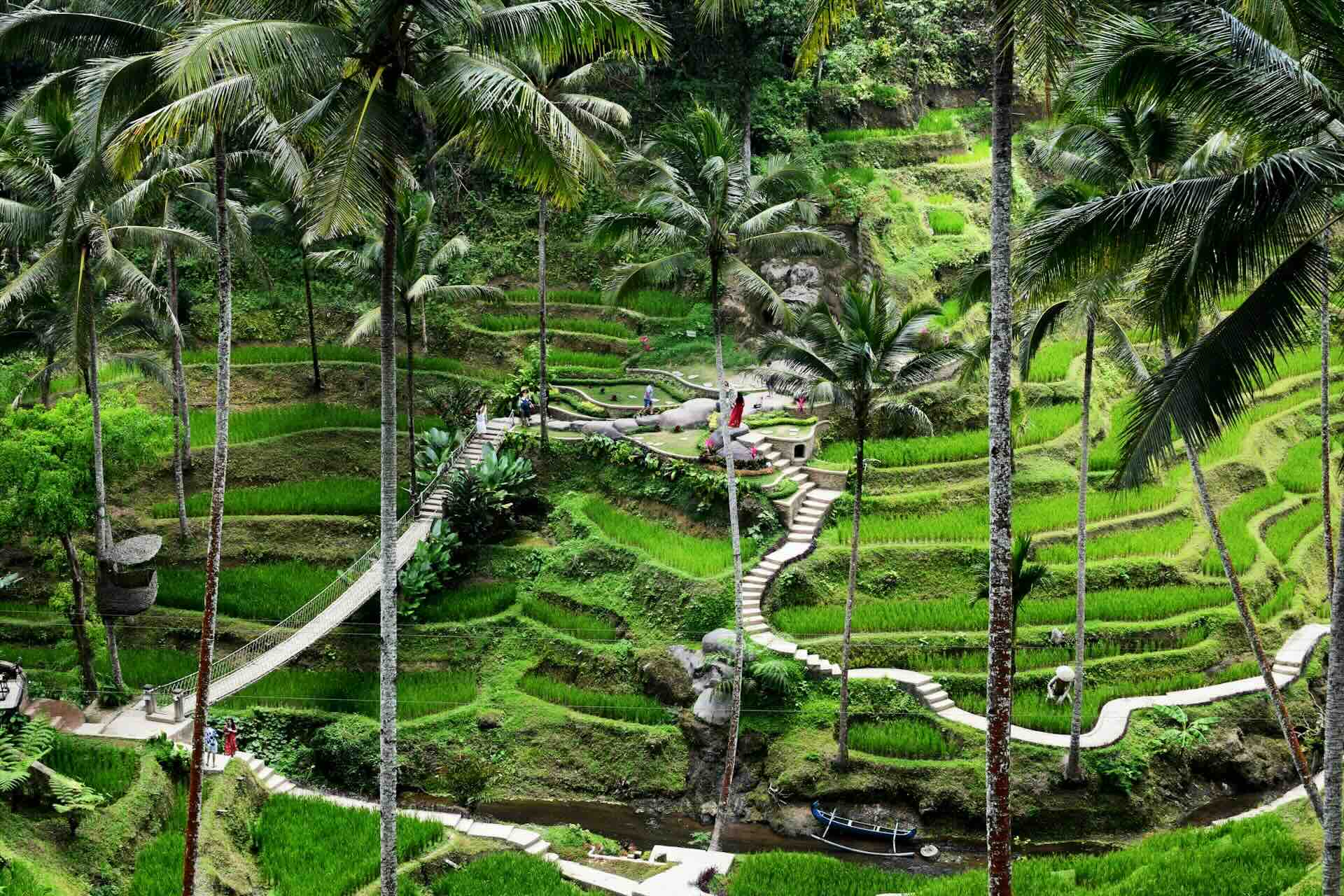
Ubud, Indonesia jungle calm and creative culture come together in a destination that feels lush, reflective, and deeply layered. In the uplands of Bali, Ubud offers a different rhythm from the island’s beach focused escapes. The appeal here is not surf, nightlife, or coastal glamour. It is rice fields, temple culture, art studios, jungle air, and a pace that encourages attention rather than urgency. Ubud feels beautiful, but its deeper strength is how naturally it combines landscape, craft, ritual, and everyday life.
Why Ubud Feels So Distinct
Some destinations are memorable because they stimulate you constantly. Ubud works in a quieter way. It feels alive, but not loud. The energy comes from movement through a more textured environment, scooters on narrow roads, offerings placed outside doorways, artists at work, cafés opening into greenery, and a landscape that always seems close.
That is what gives Ubud its staying power. It does not depend on one attraction or one view. It creates a fuller atmosphere made of nature, culture, and mood. Travelers who want a place that feels both calming and creatively charged often connect with Ubud very quickly.
Jungle Calm Shapes the Entire Experience
The landscape around Ubud is a major part of its identity. Trees, ravines, rice terraces, and thick tropical greenery give the area a softness and depth that change the emotional feel of the trip. Even when you are in a busier part of town, the surrounding environment still seems to press close.
This matters because Ubud’s calm does not come from emptiness. It comes from the way the natural setting softens daily life. The jungle atmosphere makes everything feel slightly more sheltered and more inward. That gives Ubud a restorative quality without making it feel still or lifeless.
A Different Side of Bali
Ubud often appeals most strongly to travelers who want a more cultural and inland version of Bali. Instead of building the trip around beach clubs and long stretches of coast, Ubud offers temples, studios, markets, hillside walks, and a town shaped by ritual and artistic life. The destination feels less about display and more about texture.
That difference is important. Ubud gives Bali another register, one that feels more introspective, more rooted in craft, and more connected to everyday spiritual and cultural practice. For many travelers, that makes it more memorable than a purely resort driven experience.
Creative Culture Is Everywhere
Art and creativity are not a side note in Ubud. They are built into the place. Painting, dance, carving, textiles, design, architecture, and handcrafted detail all contribute to the town’s atmosphere. Even many of the cafés, shops, and guesthouses feel shaped by an aesthetic sensibility rather than by utility alone.
This gives Ubud a kind of visual and cultural richness that goes beyond sightseeing. You feel that creativity in ordinary moments, in carved doorways, in gallery spaces, in temple decorations, and in the broader care given to space and presentation. That consistency makes the town feel distinctive rather than generic.
The Town Works Through Layers
Ubud is not a destination that reveals itself all at once. It works in layers. One moment may feel quiet and green, another busy and social, another almost ceremonial. Streets can hold traffic and motion, while nearby paths can open into rice fields or more secluded corners. The contrast between busier central areas and softer outer edges is part of what makes the place interesting.
This layered quality gives Ubud more depth than a simple wellness destination or arts town label can capture. It is both of those things, but it is also a functioning Balinese town with real complexity, real ritual life, and a pace that changes block by block.
Rice Fields, Paths, and the Pleasure of Walking
One of Ubud’s strongest pleasures is walking beyond the most obvious central streets. Paths near rice fields, smaller roads, and greener edges of town often reveal the version of Ubud that stays with people longest. The landscape begins to open, and the balance between cultivation and jungle becomes easier to feel.
This is where the destination often becomes more than a concept. It becomes physical. You feel the humidity, hear the insects and birds, see the texture of the terraces, and understand how strongly the environment shapes daily life. Ubud rewards this kind of slower movement.
Spiritual Rhythm and Daily Ritual
Ubud also feels distinct because spirituality is not hidden away in formal spaces alone. Ritual appears visibly in daily life. Temple culture, offerings, dress, ceremony, and the way sacred and ordinary spaces overlap all contribute to a destination that feels structured by more than commerce or tourism.
That presence gives the town a different kind of depth. Even travelers who are not there for explicitly spiritual reasons often feel the effect. Ubud’s atmosphere is partly shaped by the sense that beauty, devotion, and daily routine remain closely linked. That connection gives the place more gravity and more coherence.
Wellness Fits the Setting Naturally
Ubud is often associated with wellness, but what makes that association work is that it fits the environment. The greenery, the calmer pace, the emphasis on reflection, and the creative culture all support a more restorative kind of trip. Wellness here feels less like an added product and more like an extension of the setting.
This does not mean every traveler has to come for yoga or retreat culture. It means the destination naturally lends itself to a slower, more intentional experience. Even simple habits, a quieter morning, a long lunch, a walk through the rice fields, can feel more grounding in Ubud than they might elsewhere.
Food, Cafés, and Time to Linger
Ubud’s dining and café scene contributes strongly to its identity because it supports the town’s slower pace and visual style. Meals here often feel connected to the setting, open air spaces, greenery, handcrafted interiors, and an atmosphere that encourages staying longer than planned.
This matters because Ubud works best when you do not rush through it. The best version of the destination usually includes pauses, time for coffee, long meals, and moments when doing less actually reveals more. The town rewards that kind of attention.
More Than a Retreat Destination
It would be easy to reduce Ubud to a wellness retreat image, but that would miss the richness that makes it so compelling. Ubud is also about art, performance, market culture, architecture, agriculture, and a strong Balinese identity that runs deeper than the polished version some travelers first encounter.
That is one reason the destination stays interesting over several days. The beauty is immediate, but the cultural texture keeps the place from becoming too soft or one dimensional. Ubud has calm, but it also has character.
When Ubud Feels Best
Ubud is especially rewarding when travelers give it enough time to move beyond first impressions. It works best when the trip includes quieter mornings, time outside the busiest center, and enough flexibility to let the landscape and atmosphere shape the day. In those conditions, the balance between jungle calm and creative culture becomes much more visible.
Its appeal is not only about seeing certain places. It is about allowing the setting, rhythm, and cultural texture to become part of how the trip feels.
Who Ubud Is Best For
Ubud suits travelers who appreciate slower travel, art, greenery, ritual, and destinations that feel emotionally textured. It works especially well for couples, solo travelers, wellness minded travelers, and culturally curious visitors who want Bali with more depth than a beach focused itinerary alone can provide.
It is also a strong fit for travelers who care about atmosphere as much as activity. Ubud is less about constant spectacle and more about sustained feeling.
The Lasting Appeal of Ubud
Ubud stays with people because it feels composed in a very particular way. The jungle gives it calm. The creative culture gives it expression. The rituals give it depth. The rice fields and town life give it rhythm. Nothing feels entirely separate from the rest.
That is what makes Ubud more than simply a beautiful stop in Bali. It feels like a place where landscape, creativity, and daily life still support one another naturally. For travelers who want beauty, cultural richness, and a destination that encourages a real shift in pace, Ubud remains one of the most rewarding places in Indonesia.