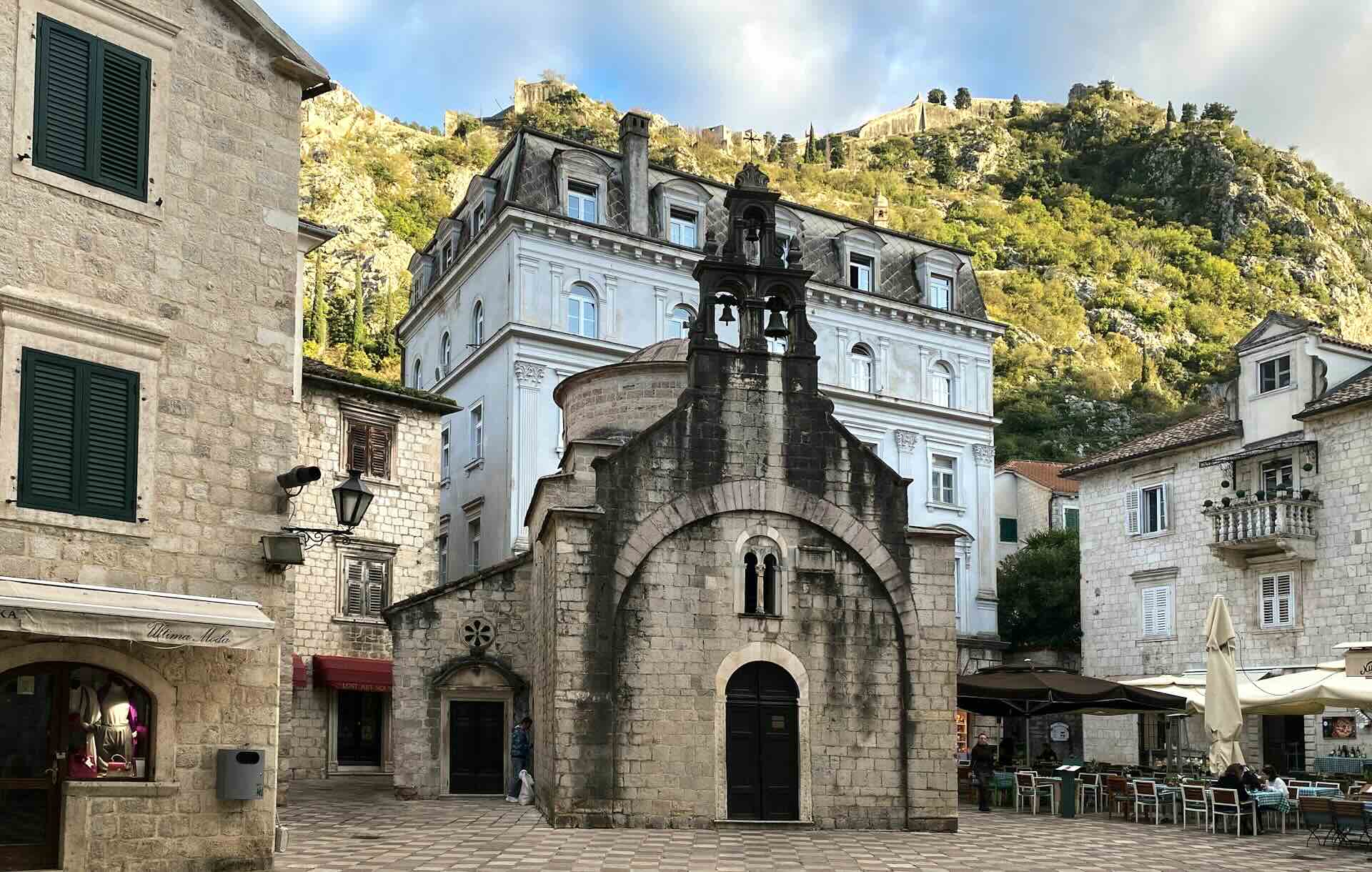
Kotor, Montenegro between mountains and the Adriatic introduces a destination where dramatic geography shapes the entire experience. Set along the Bay of Kotor, the city sits between steep limestone mountains and calm coastal water, creating a setting that feels enclosed, protected, and visually striking.
Kotor does not rely on size or scale. It relies on contrast. Mountains rise sharply behind a compact medieval town, while the Adriatic provides openness in front.
A Walled Old Town That Feels Intact
Kotor’s Old Town anchors the experience.
Stone walls surround a maze of narrow streets, small squares, and historic buildings. Churches, cafés, and residences fill the space without feeling staged.
You move through passageways that feel unchanged.
The layout encourages slow exploration rather than direct navigation.
The Bay Defines the Atmosphere
The Bay of Kotor shapes both the landscape and the pace.
Water remains calm, almost lake like, due to the surrounding mountains. Reflections of cliffs and buildings create a quiet visual rhythm.
The bay softens the intensity of the terrain.
It adds balance to the environment.
Climbing Above the City Changes Perspective
The climb to the fortress above Kotor offers one of the region’s defining experiences.
Stone steps lead up the mountainside, revealing wider views with each level. From the top, the Old Town, bay, and surrounding peaks come together in a single frame.
The climb requires effort, but the reward feels proportional.
It shifts how you understand the city’s position within the landscape.
Architecture Reflects a Layered History
Kotor’s buildings reflect influences from different periods.
Venetian architecture appears throughout the Old Town, visible in stonework, windows, and public spaces. Churches and palaces add depth to the visual experience.
The city does not present one era.
It shows accumulation over time.
Small Details Define the Experience
Kotor rewards attention to detail.
Cats move through the streets and squares, becoming an unofficial symbol of the city. Laundry hangs between buildings. Light filters through narrow alleys.
These elements make the city feel active and lived in.
Nothing feels overly polished.
Day Trips Expand the Experience
The surrounding bay includes smaller towns that add variety.
Perast offers a quieter, more open setting with views across the water. Boat rides provide access to nearby islands and coastal viewpoints.
Leaving Kotor briefly adds context.
Returning reinforces its compact intensity.
Evenings Shift the Energy
As cruise visitors leave, Kotor becomes quieter.
Streets open up, and the pace slows. Restaurants and cafés feel more relaxed.
Evening allows the city to reset.
It becomes easier to absorb the atmosphere.
The Landscape Feels Immediate
In Kotor, nature feels close.
Mountains rise directly behind the town rather than at a distance. The bay sits at the edge of the streets.
You do not travel to see the landscape.
You exist within it.
Why Kotor Feels Distinct
Kotor, Montenegro between mountains and the Adriatic stands out because the setting defines everything.
Geography shapes architecture, movement, and atmosphere.
The city does not separate itself from its environment.
It integrates into it.
How to Experience Kotor Fully
Spend time inside the Old Town without rushing.
Climb to the fortress for a full view of the bay.
Take a short trip to nearby towns like Perast.
Walk along the waterfront to see how the city meets the water.
Stay into the evening to experience a quieter version of Kotor.
Final Thoughts on Kotor
Kotor offers a concentrated experience.
The combination of mountains, water, and medieval structure creates a place that feels cohesive and grounded.
The city does not overwhelm.
It draws you in gradually.
That balance makes it memorable.