Tag: Caucasus travel

  • Yerevan, Armenia A City Framed by History and Mountains

    Yerevan, Armenia A City Framed by History and Mountains

    Yerevan, Armenia a city framed by history and mountains feels warm, grounded, and deeply symbolic from the moment you arrive. Armenia’s capital has an immediacy that many older cities do not. It feels lived in rather than staged, open rather than formal, and full of visual reminders that history here is never far away. Broad avenues, rose colored stone, public squares, cafés, and distant mountain views all shape the city’s identity. Yerevan does not overwhelm through scale. It draws you in through atmosphere, memory, and a quiet but unmistakable sense of endurance.

    Why Yerevan Feels So Distinct

    Some capitals are defined by grandeur. Yerevan works through emotional weight and setting. The city feels both ancient and modern, but not in a polished or overly curated way. It has depth, but it also has ease. You can feel the long historical arc of the place, yet daily life still unfolds in a way that feels social, current, and approachable.

    That balance is part of what makes Yerevan memorable. It is a city with serious historical meaning, but it does not feel sealed off by that meaning. Instead, it remains open, conversational, and full of everyday movement. Travelers who like cities with personality rather than perfection often respond strongly to Yerevan.

    A Capital With Deep Historical Roots

    Yerevan is one of the world’s oldest continuously inhabited cities, and that long timeline matters even if the city does not always present itself through one preserved historic center. Its roots reach back to the ancient fortress of Erebuni, and that sense of age gives Yerevan unusual gravity.

    However, the city does not feel trapped in antiquity. Its historical identity exists alongside a more recent urban form shaped by public squares, civic buildings, housing blocks, and wide streets. This combination makes Yerevan feel layered rather than frozen. It is a city where deep history and modern national life continue to share the same space.

    Framed by Mountains and Memory

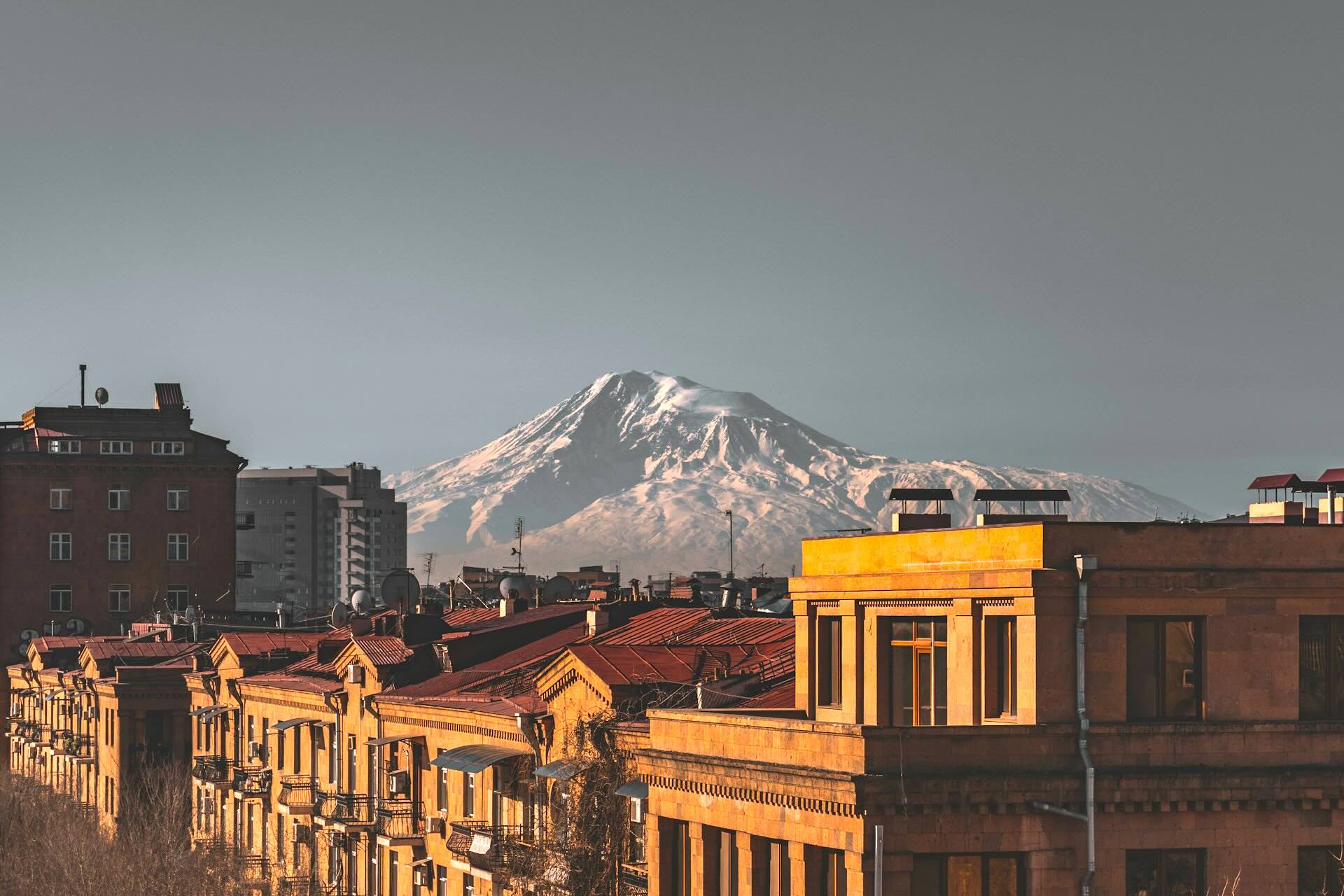
    Few capitals are shaped so powerfully by their setting. Yerevan is closely tied to the mountain landscape around it, and the visual and emotional presence of Mount Ararat remains central to the city’s identity. Even though the mountain lies beyond Armenia’s current border, it still feels inseparable from Yerevan’s sense of place.

    That mountain presence changes the city’s emotional atmosphere. It adds scale, distance, and symbolism to everyday views. Yerevan can feel intimate at street level, but the horizon always hints at something larger, older, and more enduring. This is one reason the city leaves such a strong impression. It feels geographically and emotionally framed.

    The Power of Rose Tuff and Urban Warmth

    Yerevan is often called the Pink City because of the volcanic tuff stone used in many of its buildings. That material gives the city a warmth that is instantly recognizable. In bright sun, the stone can look soft and glowing. In evening light, it can feel deeper and more reflective. This visual consistency helps give Yerevan a strong civic identity.

    The effect is more than aesthetic. The stone makes the city feel human. Even larger buildings often seem warmer and less severe than they would in concrete or gray stone. This contributes to Yerevan’s approachable mood. The city has seriousness, but it rarely feels cold.

    Republic Square and the Civic Heart of the City

    Republic Square is one of the clearest expressions of Yerevan’s character. It is formal without feeling rigid, grand without becoming remote. The square gives the city a center of gravity and a sense of civic clarity that anchors the wider urban experience.

    This is where Yerevan’s public identity feels most visible. The architecture, scale, and rhythm of the space suggest a capital city with both ceremony and daily life. People cross it, gather near it, and return to it. The square feels important, but still usable, and that balance suits Yerevan very well.

    The Cascade and the City’s Upward Energy

    The Cascade adds another dimension to Yerevan by connecting the city to elevation, views, and contemporary cultural life. It brings movement upward and outward, allowing travelers to see the city not just as a series of streets and squares, but as part of a larger landscape.

    From higher points, Yerevan begins to make more sense. The city’s relationship to mountains, skyline, and open space becomes clearer. The Cascade also reflects something important about Yerevan’s character. It is not only a city of memory and weight. It is also a city with energy, ambition, and a visible desire to create public life around art, walking, and shared space.

    A Social City Built Around Cafés and Conversation

    Yerevan is a city that feels social in a very natural way. Cafés, outdoor seating, long conversations, and evening strolls all seem to fit easily into the urban rhythm. This is not incidental. It is one of the city’s defining qualities.

    Travelers often remember not only the landmarks, but also the feeling of sitting in a square, walking along a busy avenue, or lingering over coffee while the city moves around them. Yerevan encourages that kind of travel. It rewards presence more than speed. The city feels best when you let yourself settle into its pace.

    Culture, Memory, and National Identity

    Yerevan carries a great deal of national meaning. Museums, memorial spaces, archives, and cultural institutions all contribute to a city that feels closely tied to Armenian identity. This gives Yerevan a seriousness that distinguishes it from cities that rely more heavily on surface charm.

    That said, the city is not defined by solemnity alone. What makes Yerevan powerful is the way memory and everyday life coexist. Cultural institutions matter here, but so do family routines, public gathering, and a living urban culture that continues to evolve. Yerevan feels reflective, but never inert.

    Markets, Streets, and Everyday Texture

    Yerevan’s appeal is not limited to major squares and cultural sites. The city also works through smaller textures, market life, side streets, changing neighborhoods, and the movement between more formal and more ordinary spaces. This is where the city becomes more personal.

    Walking through Yerevan, you begin to notice how the larger civic identity gives way to a more intimate urban experience. The capital becomes a local city again. That shift matters. It keeps Yerevan from becoming too monumental. It reminds you that this is a place where people live fully, not just a place where history is displayed.

    A Good Base for Armenia Beyond the Capital

    Yerevan also works well as a base for exploring more of Armenia. That practical role adds to its value. Travelers can use the city to connect to monasteries, mountain landscapes, and other historic places, then return to a capital that feels comfortable, social, and easy to understand.

    However, Yerevan is not merely functional. It earns its place because it has enough personality and depth to hold attention on its own. Even travelers focused on wider Armenia often find that the city lingers in memory longer than expected.

    When Yerevan Feels Best

    Yerevan tends to feel especially rewarding when the weather supports walking, outdoor cafés, and longer evenings in public spaces. In these conditions, the city’s warmth becomes even more visible, and its mountain setting often feels sharper and more dramatic.

    Still, Yerevan does not depend entirely on ideal weather. Its appeal comes from civic form, material warmth, historical depth, and social atmosphere as much as from season. The city has enough identity to remain compelling beyond its most photogenic moments.

    Who Yerevan Is Best For

    Yerevan suits travelers who care about history, culture, and cities that feel emotionally grounded. It works especially well for people who appreciate capitals with a strong local rhythm and a visible connection to landscape and national identity. Couples, solo travelers, and culturally curious visitors can all do very well here.

    It is also a strong fit for travelers who want a city that feels meaningful without being overly polished. Yerevan has beauty, but it comes through texture, light, material, and memory rather than through perfection.

    The Lasting Appeal of Yerevan

    Yerevan stays with people because it feels sincere. It is historic, but not frozen. Social, but not superficial. Framed by mountains, but still intimate at street level. The city carries memory in a visible way, yet it still leaves room for warmth, conversation, and everyday pleasure.

    That is what makes Yerevan more than simply a capital city. It feels like a place where landscape, history, and urban life continue to shape one another in real time. For travelers who want a destination with depth, atmosphere, and lasting emotional presence, Yerevan offers one of the most distinctive city experiences in the region.

    Plan a trip to Yerevan today.

  • Tbilisi, Georgia A Crossroads of Culture and Design

    Tbilisi, Georgia A Crossroads of Culture and Design

    Tbilisi, Georgia a crossroads of culture and design feels layered, expressive, and impossible to flatten into one simple identity. The city sits between Europe and Asia in both geography and spirit, and that position gives it unusual depth. Tbilisi feels old and inventive at the same time. Its streets move between churches, balconies, bathhouses, creative hotels, bold interiors, and neighborhoods that seem to reinvent themselves without erasing what came before. The city does not present one clean narrative. That complexity is exactly what makes it so compelling.

    Why Tbilisi Feels So Distinct

    Some cities win people over with polish. Tbilisi works through character. It feels textured, slightly unruly, and deeply alive. The appeal comes from contrast. Historic churches stand near contemporary design spaces. Worn facades sit beside sharply conceived cafés and hotels. Traditional forms remain visible, yet the city also has a strong appetite for experimentation.

    That tension gives Tbilisi unusual energy. It does not feel preserved in one era, and it does not feel eager to erase its past in pursuit of something newer. Instead, it seems to hold multiple identities at once. For travelers who like cities with unpredictability, depth, and style, Tbilisi can be unusually rewarding.

    A City Built on Layers

    Tbilisi makes its strongest impression through accumulation. The city does not depend on one square, one monument, or one district to define itself. Instead, it reveals itself in layers. Streets climb and dip. Old houses lean toward narrow lanes. Courtyards open unexpectedly. Modern interventions appear where you least expect them.

    This layered quality is central to the experience. Tbilisi feels shaped by time, trade, religion, migration, and reinvention. You can sense all of that in the urban fabric. The city does not read as a single style. It reads as a long conversation between different periods and influences.

    The Historic Core and the Pleasure of Wandering

    Tbilisi is one of those cities best understood on foot. The historic center draws you into a pattern of sloping streets, churches, terraces, balconies, and shifting viewpoints that make wandering feel more rewarding than strict itinerary building. The old city is not neat in a rigid way. It is visually rich, slightly irregular, and full of transitions.

    That irregularity is part of its beauty. Tbilisi does not feel over arranged for visitors. It feels lived in. The best moments often come through movement rather than arrival, turning into a side street, looking up at a weathered balcony, or finding a courtyard that feels half hidden from the city around it.

    Balconies, Brick, and Urban Texture

    Few cities feel as visually textured as Tbilisi. Wooden balconies, old brick, church domes, stone passages, and patched facades all help create a streetscape that feels expressive rather than polished. Even the imperfections contribute to the atmosphere. Tbilisi does not hide age. It uses it.

    That texture gives the city emotional force. It feels intimate and worn in, but not tired. The old architecture carries memory, while the changing businesses, interiors, and public life keep the city from settling into nostalgia. This mix of beauty and roughness is one of the reasons Tbilisi lingers in the mind.

    A Crossroads in More Than Name

    The phrase crossroads of culture fits Tbilisi because the city genuinely feels shaped by exchange. It carries traces of different empires, religions, cuisines, and design influences, yet it still feels unmistakably itself. That is not an easy balance to achieve.

    You notice this in the city’s architecture, in the variety of social spaces, and in the way tradition and innovation seem to coexist without fully blending into one another. Tbilisi does not smooth out its contradictions. It leaves them visible. That gives the city a stronger and more interesting personality than places that feel too resolved.

    Design as Part of the City’s Identity

    Design matters in Tbilisi. It is not only an added layer for visitors. It feels woven into the city’s current identity. Bold hotel interiors, thoughtful cafés, adaptive reuse, and a willingness to combine old structures with new visual ideas all give Tbilisi a design minded atmosphere that feels current and confident.

    What makes this especially effective is that design here rarely feels sterile. Tbilisi does not try to become minimal just to appear modern. Its design culture often works with contrast, mood, material, and memory. That approach suits the city. Clean perfection would feel wrong here. Tbilisi is strongest when design sharpens its complexity rather than simplifying it.

    Old Soul, Creative Momentum

    Tbilisi has an old soul, but it also has creative momentum. That is one of its most attractive qualities. The city feels rooted in ritual, food, faith, and long memory, yet it also gives space to younger energy, new businesses, cultural experimentation, and independent thinking.

    This combination makes the city feel current without becoming generic. Travelers who enjoy destinations with artistic life often respond strongly to Tbilisi because the city does not treat creativity as a surface feature. It feels embedded in the way neighborhoods, interiors, and social spaces continue to evolve.

    Food, Wine, and Social Atmosphere

    Tbilisi is also a city that understands pleasure. Meals matter here, but so do pacing, conversation, and setting. Food and wine are not separate from the city’s identity. They are part of how Tbilisi expresses hospitality and cultural confidence.

    This matters because the city works best when approached slowly. Long meals, wine bars, relaxed cafés, and evening walks all fit naturally into the rhythm of a stay. Tbilisi rewards appetite, but not only in a culinary sense. It rewards curiosity, observation, and time spent letting the city reveal itself.

    A City of Contrasts That Actually Hold Together

    In many cities, contrast can feel fragmented. In Tbilisi, it feels coherent. The older and newer parts of the city do not always blend cleanly, but they still belong to the same emotional world. A modern design hotel, a traditional bathhouse area, a historic church, and a rough edged courtyard can all make sense within a single day.

    That coherence is what elevates Tbilisi beyond novelty. The city does not feel like random opposites forced together. It feels like a place that has learned to live with different tempos and different histories at once. That makes it richer and more memorable than cities that present a more polished but flatter version of themselves.

    When Tbilisi Feels Best

    Tbilisi can be rewarding across much of the year, but it often feels especially appealing when walking is comfortable and daily life spills more visibly into streets, terraces, and open spaces. In these conditions, the city’s social atmosphere becomes easier to absorb and its visual contrasts become even more vivid.

    Even so, Tbilisi does not depend entirely on ideal weather. The city’s appeal comes from urban texture, mood, and layered identity as much as from climate. It has enough interior life, enough depth, and enough visual complexity to remain engaging in quieter seasons as well.

    Who Tbilisi Is Best For

    Tbilisi suits travelers who appreciate design, atmosphere, and cities that feel strongly themselves. It works especially well for people who enjoy walking, food culture, layered architecture, and destinations that resist easy summary. Couples, solo travelers, and culturally curious visitors can all do very well here.

    It is also a strong fit for travelers who want a city with style but do not want something overly polished. Tbilisi feels expressive rather than refined in a conventional sense. That difference is part of its power.

    The Lasting Appeal of Tbilisi

    Tbilisi stays with people because it feels alive in multiple directions at once. It is historic, but never static. Designed, but never sterile. Social, but still introspective in places. Very few cities manage to feel this expressive without becoming chaotic.

    That is what makes Tbilisi more than an interesting stop in the Caucasus. It feels like a real urban crossroads, one where culture, memory, creativity, and design continue to negotiate with each other every day. For travelers who want a destination with texture, intelligence, and a strong visual identity, Tbilisi offers one of the most rewarding city experiences in the region.

    Plan a trip to Tbilisi today.