Tag: European cultural destinations

  • Vienna Between Imperial Elegance and Café Culture

    Vienna Between Imperial Elegance and Café Culture

    Vienna carries itself with quiet confidence, and Vienna between imperial elegance and café culture captures exactly what makes the city so distinctive. Grand palaces and ornate opera houses reflect centuries of Habsburg power, while intimate coffeehouses anchor daily life with warmth and conversation.

    Few cities balance monumentality and intimacy so seamlessly. In Vienna, you can move from gilded halls to marble topped café tables within minutes. The contrast does not feel forced. It feels natural.

    Imperial Architecture That Still Defines the Skyline

    Vienna’s Ringstrasse frames much of its imperial identity.

    Parliament, the State Opera, and Hofburg Palace create a visual language of symmetry and scale. Facades are detailed and imposing. Interiors reflect wealth and cultural ambition.

    Walking these boulevards feels cinematic.

    Yet despite their grandeur, these spaces remain accessible rather than distant.

    Palaces That Reflect Power and Precision

    Schönbrunn Palace and the Hofburg complex reveal how carefully curated imperial life once was.

    Rooms display ornate chandeliers, frescoed ceilings, and symmetrical gardens.

    The design communicates discipline and ceremony.

    Even as a visitor, you sense the order and hierarchy that shaped Vienna’s historical identity.

    Café Culture as Counterbalance

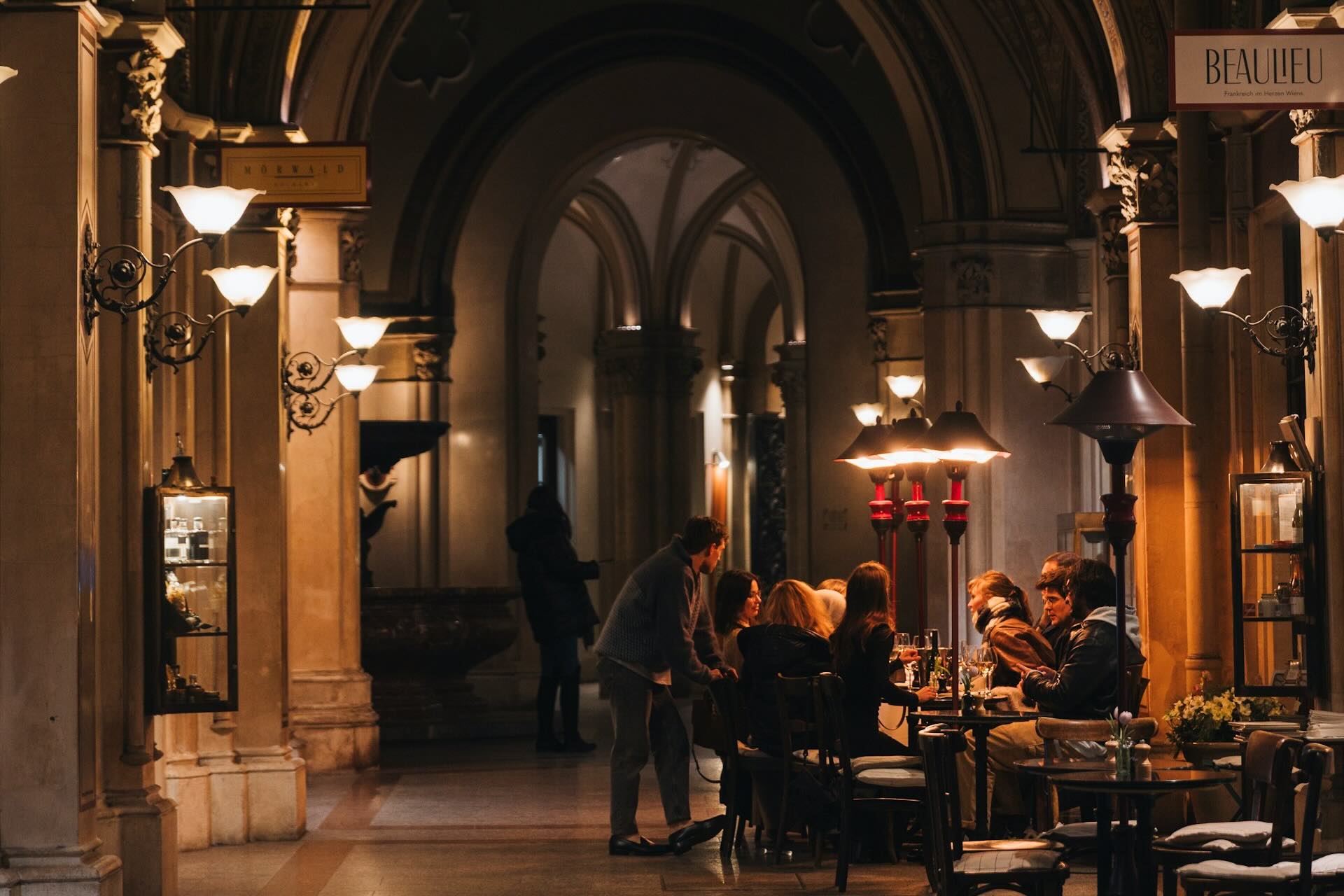
    After absorbing imperial scale, stepping into a Viennese café changes the atmosphere immediately.

    Coffeehouses like Café Central or smaller neighborhood spots invite lingering.

    Marble tables, newspapers, and soft lighting create an environment built for conversation and reflection.

    The café is not just a stop for caffeine. It is a social institution.

    Time Moves Differently in a Coffeehouse

    Viennese cafés encourage patience.

    You are not rushed out after finishing a drink. You can sit, read, write, or observe.

    This rhythm feels intentional.

    The contrast between palace grandeur and café intimacy defines the city’s emotional range.

    Music Connects Both Worlds

    Vienna’s imperial past is inseparable from classical music.

    Opera houses and concert halls continue traditions established centuries ago.

    At the same time, smaller venues and contemporary spaces support evolving musical expression.

    Music bridges historic prestige and modern creativity.

    Markets and Neighborhoods Add Texture

    Beyond imperial landmarks, neighborhoods like Neubau and Leopoldstadt introduce contemporary life.

    Naschmarkt offers produce, spices, and casual dining in a lively setting.

    Boutiques, galleries, and street art add subtle modern energy.

    Vienna feels layered rather than frozen in time.

    Food Reflects Tradition and Evolution

    Traditional dishes such as Wiener Schnitzel and Sachertorte remain staples.

    Yet modern chefs reinterpret these classics with lighter techniques and global influence.

    Dining spans ornate dining rooms and minimalist bistros.

    Cuisine reinforces Vienna’s ability to honor heritage without resisting change.

    Public Spaces Feel Thoughtfully Designed

    Vienna’s parks and plazas offer breathing room between architectural landmarks.

    The Stadtpark and Burggarten invite rest beneath statues and tree lined paths.

    Urban planning reflects balance between density and openness.

    Even the layout feels imperial yet human scaled.

    Why Vienna Feels Composed

    Vienna rarely feels chaotic.

    Transportation runs efficiently. Streets remain orderly.

    There is elegance in how daily life unfolds.

    This composure reflects centuries of structured governance and cultural investment.

    How to Experience Both Sides of Vienna

    Start your day exploring a palace or museum.

    In the afternoon, choose a café and sit without agenda.

    Attend a concert in the evening.

    Walk through residential neighborhoods the next morning.

    Let scale and intimacy alternate naturally.

    The Emotional Impact of Contrast

    Vienna between imperial elegance and café culture is more than a tagline.

    It describes how the city feels.

    You experience grandeur without losing warmth.

    You sense history without being trapped by it.

    This balance creates depth.

    Final Thoughts on Vienna

    Vienna does not force you to choose between monumentality and comfort.

    It offers both in measured doses.

    Imperial facades command attention, while café interiors invite reflection.

    The result is a city that feels refined yet approachable, structured yet relaxed.
    Plan a trip to Vienna today.

  • What Makes Athens Feel Both Ancient and Modern

    What Makes Athens Feel Both Ancient and Modern

    Athens is a city where centuries coexist in plain sight, and what makes Athens feel both ancient and modern becomes obvious within minutes of walking its streets. Marble ruins rise above buzzing cafés. Ancient temples overlook contemporary neighborhoods filled with street art and late night dining.

    You do not have to search for contrast here. It surrounds you. Athens feels layered rather than divided. The past is visible, but the present is fully alive.

    The Acropolis as a Daily Backdrop

    Few cities live so closely with their history.

    The Acropolis is not tucked away in a distant park. It dominates the skyline. You see it from rooftops, apartment balconies, and pedestrian streets.

    Locals pass beneath monuments that date back thousands of years on their way to work or dinner.

    The ancient feels integrated rather than preserved in isolation.

    Neighborhood Life Beneath the Ruins

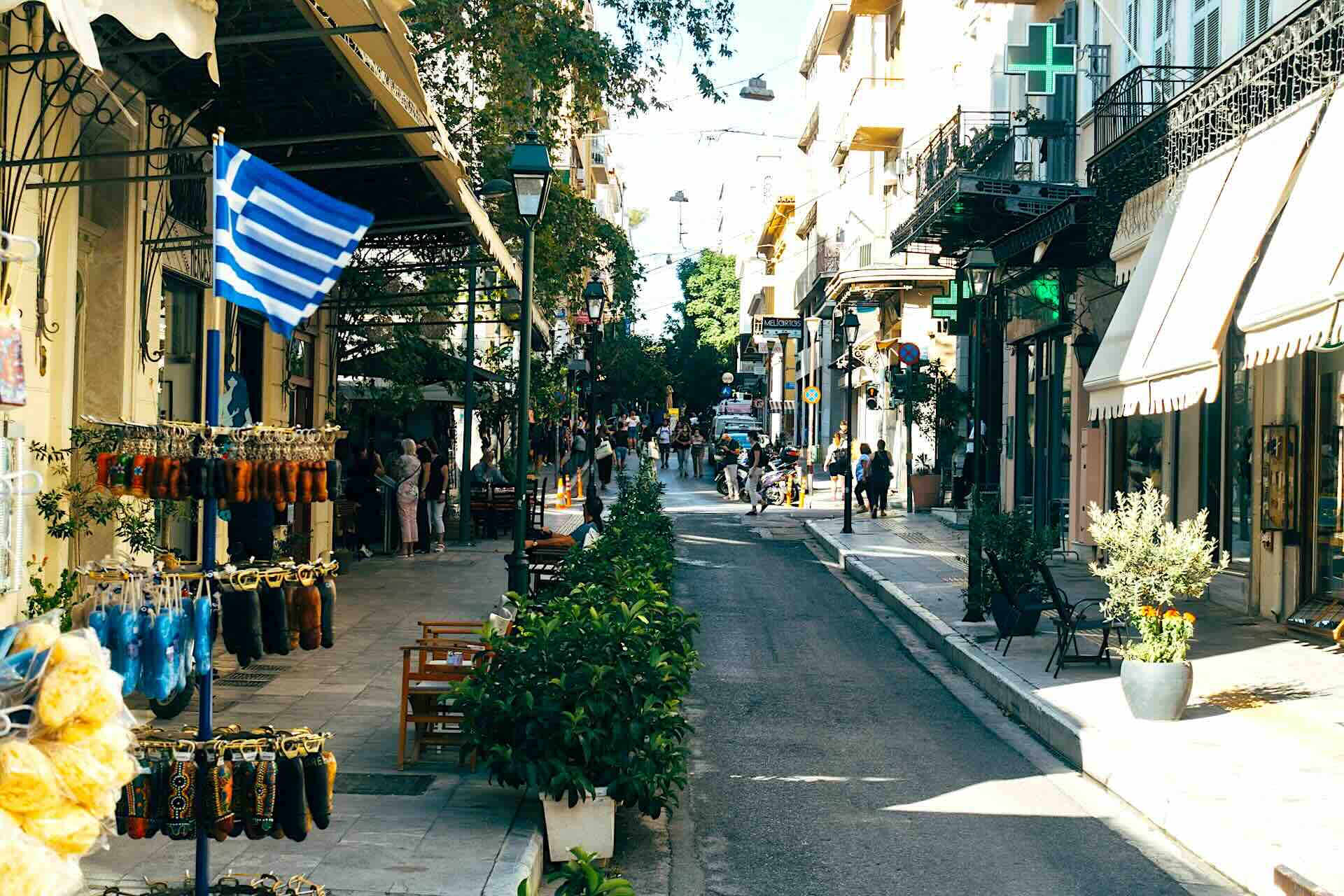
    Areas like Plaka and Monastiraki blend archaeological sites with modern commerce.

    You might walk past Roman columns and then step into a contemporary clothing store or café.

    Street musicians perform near stone pathways that have carried footsteps for centuries.

    This overlap feels natural rather than staged.

    Contemporary Cafés and Rooftop Culture

    Athens has developed a strong café and rooftop scene.

    Modern bars and restaurants frame views of the Parthenon while serving inventive cuisine and craft cocktails.

    Design forward interiors sit within historic buildings.

    Evenings feel vibrant and youthful, proving the city is not frozen in time.

    Street Art and Creative Energy

    Beyond classical architecture, Athens embraces expression through street art.

    Murals and graffiti fill entire walls in neighborhoods like Exarchia and Psiri.

    This visual language reflects economic shifts, political conversations, and youthful identity.

    It contrasts with ancient marble but complements the city’s long history of public discourse.

    Museums That Connect Eras

    Athens does not treat antiquity as static.

    Museums present ancient artifacts alongside thoughtful modern interpretation.

    Glass architecture in newer institutions frames historic views, reinforcing the dialogue between eras.

    Visitors move fluidly between centuries within a single afternoon.

    A Living Political Landscape

    Athens has been a center of debate and democracy since ancient times.

    Today, public squares still function as gathering points for conversation and expression.

    Political energy feels contemporary yet historically grounded.

    The city’s intellectual heritage continues rather than merely commemorates.

    Food That Evolves From Tradition

    Greek cuisine in Athens balances heritage with innovation.

    Traditional tavernas serve recipes rooted in family history. Nearby restaurants reinterpret those same ingredients with modern techniques.

    Markets display olives, seafood, herbs, and produce that have shaped local cooking for generations.

    Food bridges past and present without conflict.

    Architecture That Layers Rather Than Replaces

    Athens does not erase previous eras.

    Ottoman remnants, neoclassical buildings, post war apartments, and modern structures exist side by side.

    Rather than appearing chaotic, the layering feels honest.

    The city shows its scars and growth openly.

    A Pace That Feels Contemporary

    Despite its ancient foundations, Athens moves like a modern European capital.

    Transit systems, digital infrastructure, and nightlife keep pace with current expectations.

    Young professionals and creatives shape the city’s rhythm.

    History may define the skyline, but modern life defines the streets.

    The Emotional Impact of Contrast

    What makes Athens feel both ancient and modern is not just architecture.

    It is the emotional experience of moving between eras within minutes.

    You might start your day exploring ruins and end it at a contemporary art gallery or rooftop bar.

    The transition feels seamless rather than forced.

    Why Travelers Notice the Duality

    Visitors often arrive expecting only antiquity.

    They leave recognizing a city that is active, expressive, and evolving.

    Athens refuses to be reduced to a museum.

    It invites you to experience continuity instead of nostalgia.

    How to Experience Both Sides Fully

    Visit major archaeological sites early in the day.

    Spend afternoons exploring neighborhoods beyond the central monuments.

    Seek out contemporary galleries, markets, and dining spots.

    Balance historical landmarks with everyday street life.

    The contrast reveals itself naturally.

    Final Thoughts on Athens

    What makes Athens feel both ancient and modern is its refusal to separate time periods.

    The past stands visibly in the present.

    Daily life unfolds beneath monuments without reverence or detachment.

    Athens is not divided between eras. It carries them together.

    Plan a trip to Athens today.