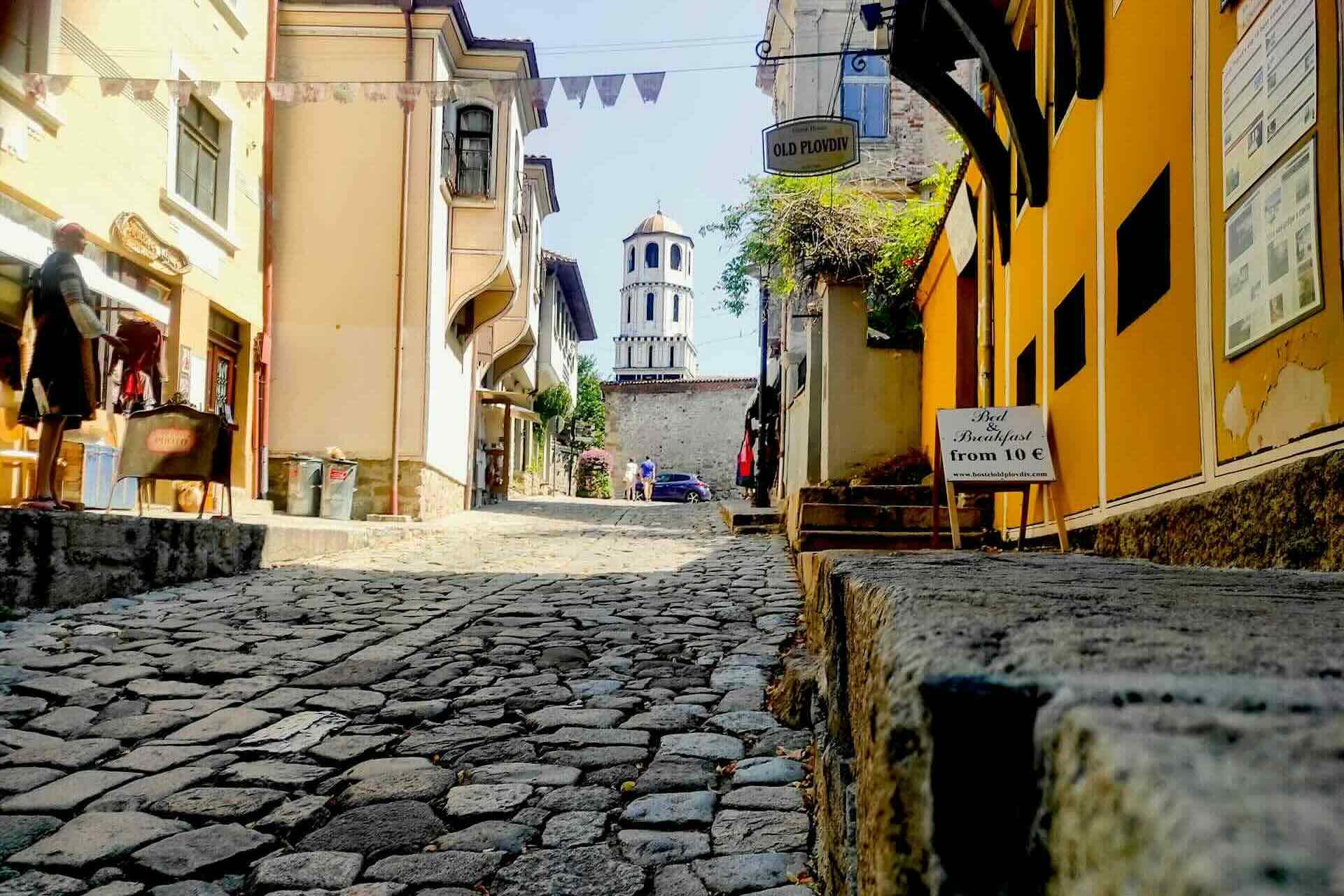
Plovdiv, Bulgaria Europe’s oldest city still thriving feels warm, layered, and remarkably alive from the first walk through its streets. This is a city where ancient history does not sit behind glass. It lives beside cafés, galleries, pedestrian streets, and everyday local rhythm. Built across rolling hills and shaped by centuries of change, Plovdiv combines Roman remains, revival era houses, creative energy, and a lived in urban confidence that makes it feel far more dynamic than a simple historic destination.
Why Plovdiv Feels So Distinct
Some old cities feel impressive but distant. Plovdiv feels old and active at the same time. That is what gives it unusual appeal. You can move from a Roman theater to a contemporary café, from cobbled lanes to a lively shopping street, and none of it feels forced. The city does not separate its past from its present. It lets them exist together in plain view.
That balance is what makes Plovdiv stand out. It feels cultured, but not stiff. Historic, but not frozen. Creative, but still grounded in local life. Travelers who want depth without heaviness often connect with Plovdiv very quickly.
A City With Extraordinary Age
Plovdiv’s age is central to its identity. The city is widely described as one of the oldest continuously inhabited urban centers in Europe, and that long timeline gives real weight to the streets and hills beneath your feet. Yet the city never feels trapped by its own age. Instead, it uses history as a foundation for a place that still moves forward.
That is an important distinction. Some destinations lean so hard on their antiquity that they become static. Plovdiv does not. Its age adds depth, but the city still feels socially alive, visually open, and fully inhabited.
The Drama of the Hills
Plovdiv’s topography helps shape the experience in a way many flatter cities cannot match. The city is strongly associated with its hills, and that gives it both visual variation and a stronger sense of place. Streets rise and fall. Viewpoints appear unexpectedly. The city never feels entirely fixed from one angle.
This matters because it gives Plovdiv more movement and atmosphere. One area may feel intimate and historic, while another opens into broader views or more contemporary urban energy. That shift keeps walking interesting and reinforces the sense that Plovdiv is a city of layers rather than a single postcard scene.
Roman Heritage in the Middle of Daily Life
Plovdiv’s Roman heritage is one of its most memorable features. The Ancient Theatre, the Roman Stadium, and other archaeological layers give the city a sense of continuity that feels unusually visible. These are not isolated fragments hidden away from the life of the city. They remain part of the city’s personality.
What makes this especially effective is the way ancient remains coexist with the present. Plovdiv does not ask you to leave the modern city behind in order to appreciate its past. Instead, the Roman layer appears naturally within the urban fabric, which makes history here feel immediate rather than remote.
The Old Town and Its Revival Era Beauty
Plovdiv’s old town brings a different kind of pleasure. If the Roman heritage gives the city gravity, the old town adds warmth, color, and human scale. This part of Plovdiv feels composed and atmospheric, with elegant houses, curving streets, and a rhythm that invites slower exploration.
The architecture here reflects another important chapter in the city’s story. The old town does not feel monumental in a rigid way. It feels textured, graceful, and full of detail. Balconies, painted facades, courtyards, and uneven streets give the area visual richness without turning it into a staged historical set.
A City of Culture That Still Feels Personal
Plovdiv has long had a strong cultural identity, and that remains part of its appeal today. The city feels artistic without becoming self conscious. Galleries, events, performance spaces, and creative businesses all contribute to an atmosphere that feels culturally engaged, but still approachable.
This makes a real difference to the travel experience. Plovdiv does not feel like a place that exists only to be admired. It feels like a place where culture still happens. That gives the city freshness and keeps it from becoming overly nostalgic.
Kapana and the Creative Pulse of the City
Kapana adds another layer to Plovdiv’s identity. Known for its creative atmosphere, walkable streets, and contemporary energy, it helps show that the city is not living only in the past. This district feels social, current, and full of movement, with a character that contrasts well with the more historic sections of the city.
What makes Kapana work is that it does not erase the older city around it. Instead, it expands Plovdiv’s personality. The result is a city that can offer archaeological depth, old town beauty, and a more modern urban pulse within a relatively compact area.
Main Street, Public Life, and Everyday Energy
Plovdiv also excels at the everyday pleasures of city life. The pedestrian center, cafés, shops, and public spaces give the city a social ease that helps tie all of its historical layers together. This is where Plovdiv feels especially alive, not only as a destination, but as a functioning city that people genuinely enjoy inhabiting.
That everyday energy matters because it prevents the city from feeling too reverent. Plovdiv has heritage, clearly, but it also has movement, conversation, and daily rhythm. The city feels best when you let those ordinary pleasures become part of the experience.
More Than an Ancient City
It would be easy to market Plovdiv only through age, but that would undersell it. The city is not compelling simply because it is old. It is compelling because it remains active, attractive, and creatively engaged despite its long history. That is what makes the title feel earned. Europe’s oldest city still thriving is not just a slogan. It captures the city’s real strength.
Plovdiv has managed to carry antiquity, revival era elegance, modern culture, and ordinary urban life all at once. Very few cities do that with such ease.
When Plovdiv Feels Best
Plovdiv works especially well when walking feels comfortable and public life spills into streets, terraces, and open spaces. In these conditions, the city’s balance becomes even clearer. The hills, the old town, the Roman sites, and the modern districts all connect more naturally when you can move through them slowly.
At the same time, Plovdiv does not depend entirely on ideal weather. Its appeal comes from urban form, historical layering, and cultural atmosphere as much as from climate. The city has enough character to remain engaging in quieter seasons too.
Who Plovdiv Is Best For
Plovdiv suits travelers who appreciate history, architecture, culture, and cities that can be understood on foot. It works especially well for people who enjoy layered destinations where the past is visible but the present still feels strong. Couples, solo travelers, and culturally curious visitors can all do very well here.
It is also a strong fit for travelers who want a historic European city with personality, but without the pressure or overexposure of more obvious names. Plovdiv feels substantial, but still relaxed.
The Lasting Appeal of Plovdiv
Plovdiv stays with people because it feels complete. The hills give it form. The Roman layer gives it depth. The old town gives it charm. The creative districts and public life give it momentum. Nothing feels isolated from the rest. The city works as one continuous experience.
That is what makes Plovdiv more than simply an ancient city in Bulgaria. It feels like a place where history remains visible without overwhelming the present. For travelers who want beauty, culture, and a city that still feels fully alive, Plovdiv offers one of the most rewarding urban experiences in southeastern Europe.