Tag: North Africa travel

  • Marrakesh, Morocco Riads, Color, and Deep Market Energy

    Marrakesh, Morocco Riads, Color, and Deep Market Energy

    Marrakesh, Morocco riads, color, and deep market energy come together in a city that feels intense, beautiful, and unforgettable. Marrakesh does not offer a quiet introduction to Morocco. It pulls travelers into courtyards, souks, spices, lanterns, tiled walls, rooftop terraces, and streets that seem to move from morning until late night.

    Why Marrakesh Feels So Distinct

    Marrakesh stands out because it overwhelms the senses in the best way. The city has color, sound, texture, scent, and movement everywhere. It is not a destination that fades into the background. It demands attention.

    That intensity gives Marrakesh its power. Travelers remember the markets, the warm walls, the carved doors, the evening crowds, and the feeling of stepping into a city with its own rhythm.

    Riads Shape the Travel Experience

    The phrase riads belongs naturally to Marrakesh. These traditional courtyard houses create some of the city’s most peaceful travel moments. Behind plain exterior walls, travelers often find tiled courtyards, fountains, plants, carved wood, and soft interior light.

    This contrast matters. Marrakesh can feel busy and loud outside, but a riad creates calm within the city. That shift from market energy to courtyard stillness defines much of the Marrakesh experience.

    Color Defines the City

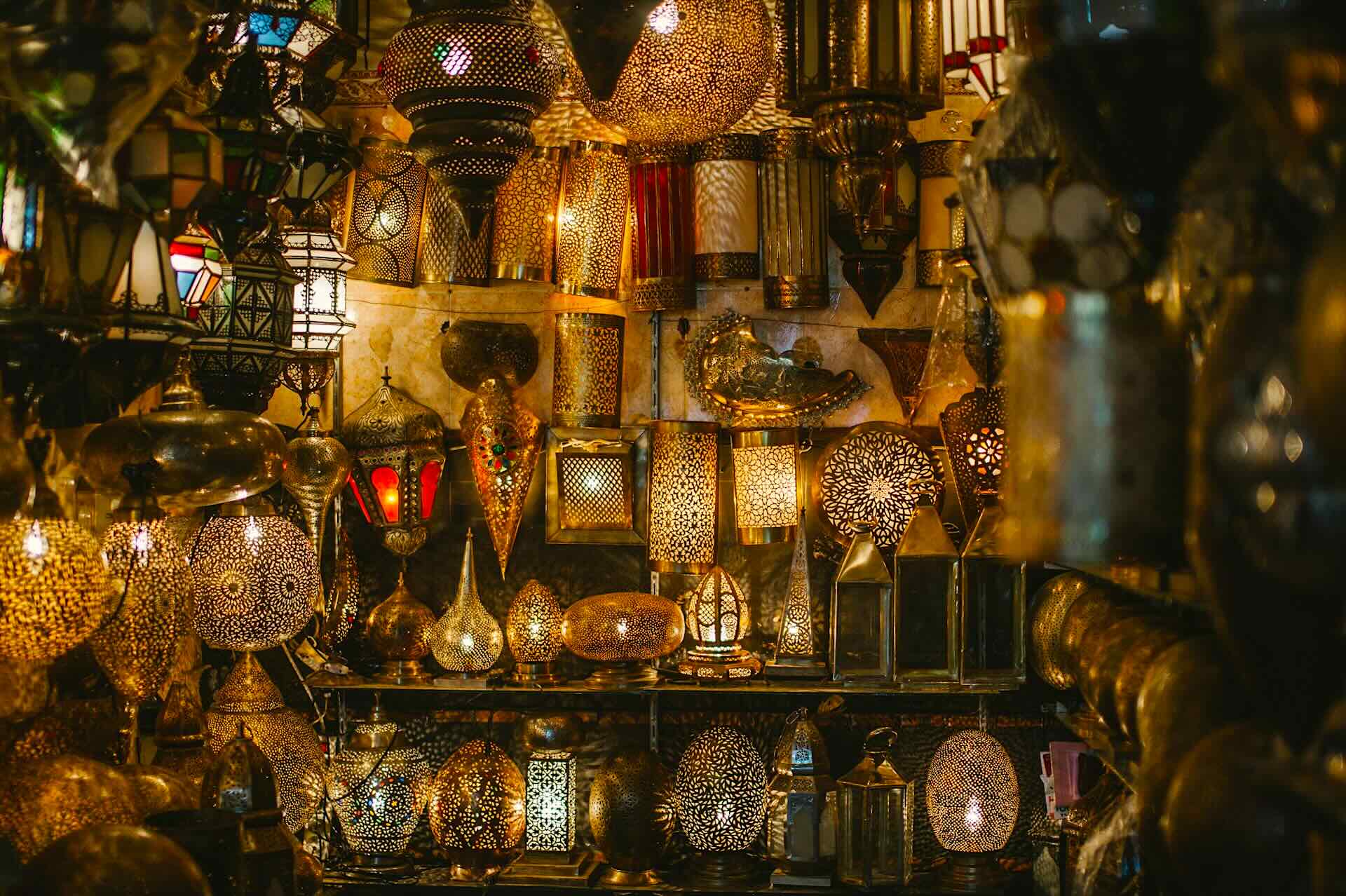
    Marrakesh is a city of strong color. Red walls, patterned tiles, woven rugs, brass lamps, spices, leather goods, ceramics, and textiles all create a rich visual world. The city’s color does not feel decorative alone. It feels central to its identity.

    This makes Marrakesh especially memorable for travelers who love design, photography, and atmosphere. Every turn can reveal another surface, pattern, doorway, or market stall worth noticing.

    Deep Market Energy in the Souks

    Marrakesh’s souks give the city its deep market energy. Narrow lanes fill with shops, workshops, sounds, scents, and constant movement. Travelers can find rugs, lanterns, spices, leather, pottery, clothing, jewelry, and everyday goods woven into the same dense maze.

    The markets can feel intense, but they are also part of the city’s life. They are not just shopping areas. They are social spaces, workspaces, and pathways through the old city.

    Jemaa el Fnaa and Evening Momentum

    Jemaa el Fnaa gives Marrakesh one of its most famous public stages. The square changes throughout the day, but it becomes especially powerful in the evening. Food stalls, lights, music, crowds, smoke, and movement create a scene that feels unlike almost anywhere else.

    This energy is central to Marrakesh. The city feels alive during the day, but evening gives it another level of force. Travelers who want to understand its rhythm should see the square after sunset.

    Architecture With Texture and Detail

    Marrakesh rewards travelers who look closely. Its architecture often works through detail rather than scale alone. Carved plaster, tilework, arches, courtyards, doors, gardens, and shaded passages give the city deep visual texture.

    This is why slow exploration matters. Marrakesh can feel chaotic at first, but its beauty becomes clearer through repeated details. The city’s surfaces tell much of its story.

    Rooftops and Quiet Views

    Rooftops offer one of the best ways to experience Marrakesh. From above, the city feels calmer and more readable. Travelers can look across flat roofs, minarets, palm trees, distant mountains, and the warm color of the medina.

    These views help balance the intensity of the streets. A rooftop meal or tea break can turn Marrakesh from overwhelming to beautiful in minutes. The city needs both perspectives.

    Gardens Add Calm to the City

    Gardens give Marrakesh another kind of beauty. They create shade, color, water, and quiet within a busy urban setting. They also show how important balance is to the city’s design.

    This calmer side matters. Marrakesh is not only markets and crowds. It also has spaces built for reflection, cooling, and escape. Those moments make the city feel more complete.

    Food, Tea, and Daily Ritual

    Food is a major part of the Marrakesh experience. Tagines, couscous, breads, olives, grilled meats, sweets, and mint tea all add to the city’s sense of place. Eating here often feels connected to setting, mood, and hospitality.

    Mint tea can feel especially important. It slows the pace and gives travelers a pause between walks, markets, and long days in the medina. In Marrakesh, those pauses matter.

    Who Marrakesh Is Best For

    Marrakesh is best for travelers who enjoy color, markets, design, food, architecture, and sensory travel. It works well for couples, solo travelers, friend groups, and culture focused visitors. It is also a strong choice for travelers who want a city that feels completely different from Western Europe.

    This is not the best place for travelers who want everything to feel quiet and predictable. Marrakesh rewards curiosity, patience, and openness. The city feels most rewarding when travelers accept its intensity instead of trying to control it.

    The Lasting Appeal of Marrakesh

    Marrakesh stays memorable because it has depth and force. The riads give it calm. The color gives it beauty. The markets give it movement. The rooftops, gardens, food, and old streets give the city its full atmosphere.

    For travelers who want a destination that feels vivid, layered, and alive, Marrakesh is a strong choice. It is not always gentle, but it is rarely forgettable. That is exactly why it leaves such a strong impression.
    Plan a trip to Marrakesh today.

  • What It’s Like to Experience Tangier at the Crossroads of Cultures

    What It’s Like to Experience Tangier at the Crossroads of Cultures

    Tangier has always existed between worlds, and what it’s like to experience Tangier at the crossroads of cultures becomes clear the moment you arrive. Positioned at the meeting point of the Mediterranean Sea and the Atlantic Ocean, and only a short distance from southern Spain, Tangier feels geographically and culturally layered.

    European influence, North African identity, colonial history, and contemporary Moroccan life overlap in visible and subtle ways. Tangier is not a city that presents a single narrative. It reveals multiple histories at once.

    A City Shaped by Geography

    Tangier’s location defines its character.

    Standing along the Strait of Gibraltar, you can see Spain across the water on clear days. This proximity has shaped trade, migration, and artistic exchange for centuries.

    Ports, ships, and shifting populations have always been part of daily life.

    You feel that sense of movement immediately. Tangier feels outward facing, connected beyond its borders.

    The Medina, Where Time Layers Itself

    The medina is the city’s emotional core.

    Whitewashed buildings, narrow streets, and shaded passages create intimacy and unpredictability. Unlike some heavily touristed medinas, Tangier’s feels lived in.

    Vendors sell spices, textiles, and everyday goods. Children move through alleyways. Conversations spill into small squares.

    It feels less curated and more organic.

    European Echoes in Architecture and Cafés

    Tangier’s international past left architectural traces.

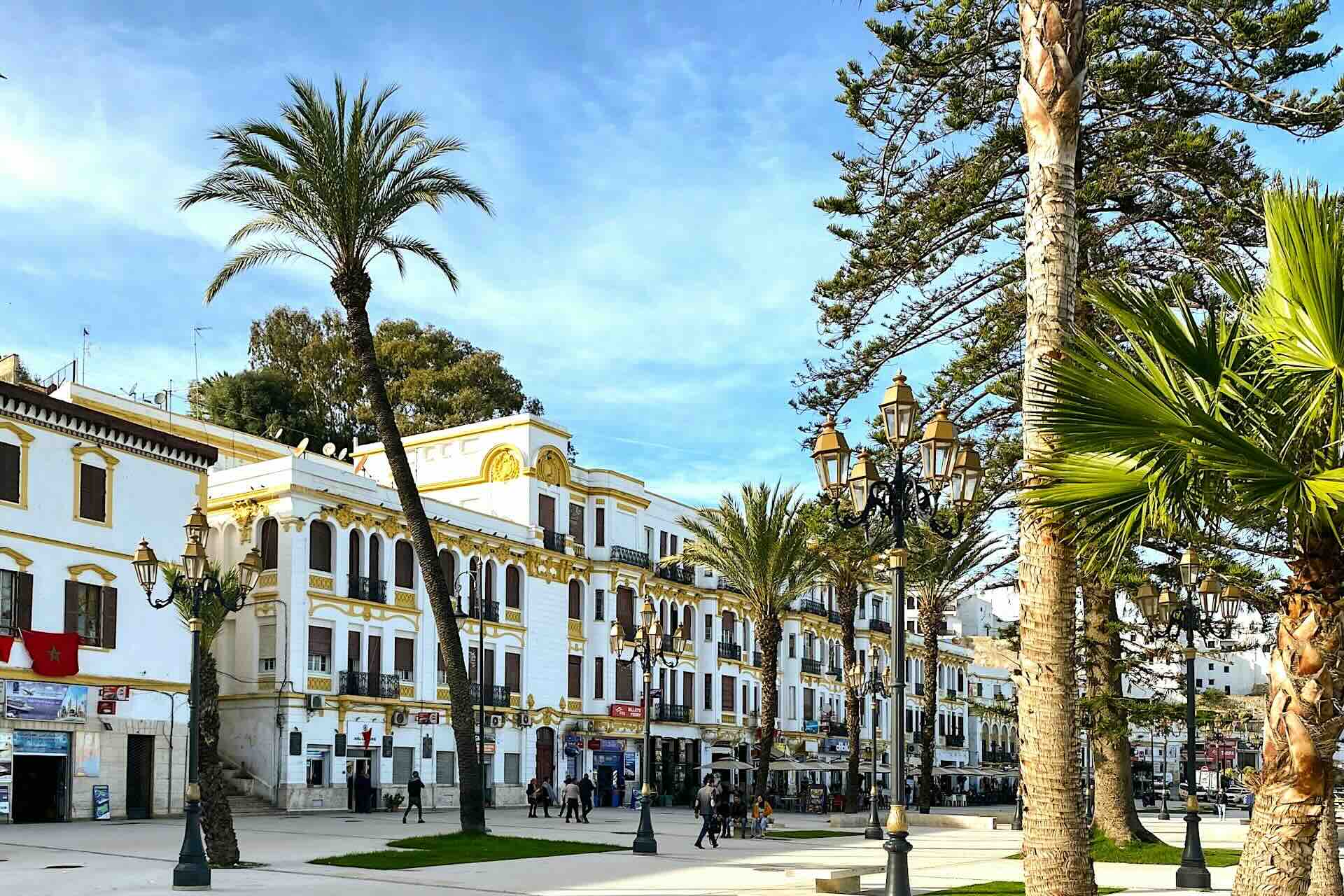
    Art Deco facades, colonial era buildings, and grand hotels reflect periods when writers, diplomats, and artists gathered here.

    Cafés facing the sea carry a European rhythm. Coffee culture feels contemplative, almost cinematic.

    You sense the legacy of literary figures who once watched the harbor from similar tables.

    A Port City With Global Energy

    Ports change cities.

    Tangier’s harbor has long been a gateway between Africa and Europe. That constant flow of people shapes the atmosphere.

    Languages overlap. French, Arabic, Spanish, and English are commonly heard.

    The city feels multilingual and outward looking without losing its Moroccan foundation.

    Markets Reflect Cultural Exchange

    Tangier’s markets show North African tradition with subtle Mediterranean influence.

    Spices, olives, fresh seafood, and textiles reflect trade routes and culinary blending.

    Food here feels influenced by both inland Morocco and coastal exchange.

    Eating in Tangier becomes a study in geography.

    The Coastline Creates Contrast

    Tangier’s coastline adds emotional range.

    Walk along the Corniche and you see modern development alongside historic views. Waves crash against rocky edges where continents nearly meet.

    The light shifts throughout the day, creating dramatic backdrops against white buildings.

    Sea and sky feel expansive, contrasting with the intimacy of the medina.

    Contemporary Tangier Is Evolving

    Modern infrastructure and cultural investment are reshaping the city.

    Art spaces, renovated historic sites, and new hospitality projects signal growth.

    Tangier is no longer defined solely by nostalgia or literary mythology.

    It feels forward moving while maintaining its layered identity.

    The Pace Feels Different From Other Moroccan Cities

    Compared to Marrakech or Fez, Tangier feels less intense.

    There is movement, but less urgency. Conversations linger longer. Sea air softens the edges.

    You can wander without constant negotiation.

    This shift in pace allows reflection rather than sensory overload.

    Where Cultures Blend Most Clearly

    The blending of cultures appears most clearly in small moments.

    A call to prayer echoes near a European style plaza. Spanish signage appears near Arabic script.

    Music shifts between traditional Moroccan sounds and international pop.

    Tangier feels like a conversation between continents rather than a fixed identity.

    Why Tangier Attracts Creatives

    Writers and artists have long been drawn to Tangier.

    The city offers both inspiration and ambiguity. It feels familiar and foreign simultaneously.

    That tension invites creativity.

    Even today, you sense that the city encourages observation and thought.

    How to Experience Tangier Fully

    Spend time in the medina without a strict plan.

    Sit at a café overlooking the sea.

    Visit both historic sites and newer cultural spaces.

    Walk along the coastline at different times of day.

    Let contrast guide your understanding.

    Why Tangier Feels Symbolic

    What it’s like to experience Tangier at the crossroads of cultures is to feel transition.

    The city represents exchange, overlap, and negotiation between identities.

    It does not resolve those contrasts. It holds them.

    That layered tension gives Tangier its quiet power.

    Final Thoughts on Tangier

    Tangier is not dramatic in the way some destinations are.

    Its strength lies in nuance.

    Between Africa and Europe, between tradition and modernity, between sea and city, Tangier stands in conversation with multiple worlds.

    Experiencing it means embracing complexity rather than seeking simplicity.

    Plan a trip to Tangier today.

  • Discover the Soul of Marrakech: A Journey Through the Medina

    Discover the Soul of Marrakech: A Journey Through the Medina

    Marrakech is a city that engages all five senses from the moment you arrive. The heartbeat of the city lies in its ancient Medina, a labyrinth of alleyways, souks, and hidden courtyards. Wandering here is not just sightseeing. It is an immersive journey into Moroccan culture, design, and tradition.

    With Travel Pal, you can craft an itinerary that balances sensory exploration with moments of calm, helping you experience the real soul of Marrakech.

    Here is how to dive deep into one of Africa’s most iconic cities.

    The Medina: Heart of the City

    Step through one of the Medina’s towering gates and you enter a living museum of Moroccan craftsmanship, history, and daily life. The warren of narrow lanes is packed with souks, riads, mosques, and markets.

    Key highlights:

    Djemaa el-Fnaa
    The main square pulses with life from morning till midnight. Street performers, snake charmers, juice vendors, and food stalls fill the space.

    Souk Semmarine
    A bustling market packed with textiles, jewelry, leather goods, and pottery. Bargaining is part of the experience.

    Rahba Kedima
    A smaller market square known for spices, baskets, and Moroccan hats.

    Ben Youssef Madrasa
    A beautifully restored Islamic school with intricate tilework and carved cedar ceilings.

    Koutoubia Mosque
    Visible from much of the city, this mosque is an architectural anchor near Djemaa el-Fnaa.

    Travel Pal helps you plan your route so you can explore the Medina’s maze without getting lost or backtracking endlessly.

    Moroccan Design and Craftsmanship

    Marrakech is a hub for Moroccan design, blending Berber, Arab, and Andalusian influences. The city has inspired generations of artists and designers.

    Top spots to explore:

    Dar Si Said Museum
    An exquisite display of Moroccan art, including carpets, jewelry, and woodwork.

    Maison de la Photographie
    Historic photos that offer a window into old Marrakech and Berber culture.

    Ensemble Artisanal
    A government-run cooperative where you can shop for quality crafts without haggling.

    Hidden riads and cafes
    Seek out design-forward riads and cafes where you can admire the fusion of traditional and modern Moroccan aesthetics.

    Travel Pal helps you map these design stops into your days alongside markets and cultural visits.

    Food: The Flavors of Marrakech

    The city’s culinary scene is an adventure in itself. From street-side grills to rooftop restaurants, Marrakech is a feast for the palate.

    Must-try dishes:

    Tagine
    Slow-cooked stews with lamb, chicken, or vegetables and fragrant spices.

    Couscous
    Traditionally served on Fridays, often with meat and vegetables.

    Harira
    A hearty lentil and tomato soup, popular during Ramadan.

    Mint tea
    The essential Moroccan drink, sweet and refreshing.

    Pastilla
    A savory pastry filled with spiced meat and dusted with powdered sugar.

    Travel Pal can help you schedule meals and culinary stops so you avoid tourist traps and discover authentic local flavors.

    Hidden Courtyards and Riads

    Behind the Medina’s weathered walls lie serene riads. These traditional houses center around tiled courtyards with fountains and lush greenery.

    Top riads to visit or stay in:

    Riad Yasmine
    Known for its photogenic pool and peaceful atmosphere.

    Riad BE
    Famous for its bright tilework and rooftop views.

    La Mamounia
    A historic luxury hotel blending old-world glamour with Moroccan style.

    Travel Pal helps you discover which riads offer the best hammams, spa treatments, or quiet corners for tea and reflection.

    Sensory Overload and How to Navigate It

    Marrakech can feel overwhelming. The sounds of the call to prayer, the scent of spices, the swirl of colors and textures, and the press of the crowds can be both thrilling and exhausting.

    Tips:

    Plan for breaks in rooftop cafes or hidden riads.
    Use mornings for exploring, and save late afternoons for quieter moments.
    Travel Pal can schedule your days for the best flow between activity and rest.

    Beyond the Medina

    Marrakech offers more than just its old city. Pair your Medina explorations with:

    Jardin Majorelle
    A stunning cobalt-blue garden made famous by Yves Saint Laurent.

    Palais El Badi
    The evocative ruins of a 16th-century palace.

    Gueliz
    Marrakech’s modern quarter, with art galleries, cafes, and boutiques.

    Travel Pal can blend modern Marrakech with ancient Medina experiences for a complete view of the city.

    Plan Your Marrakech Journey with Travel Pal

    Marrakech rewards travelers who go beyond the surface. Whether you are drawn by art, design, food, or history, this is a city where planning matters. Travel Pal helps you:

    Build an itinerary that balances markets, museums, and hidden spots
    Navigate the Medina without getting lost or overwhelmed
    Time your food stops and hammam visits
    Discover under-the-radar experiences
    Adjust plans in real time for energy levels or weather

    Plan a trip to Marrakech now at TravelPal.ai.