Braga, Portugal tradition and youth in Northern Portugal come together in a way that feels natural, lived in, and quietly magnetic. This northern city carries deep religious and historical importance, yet it also feels youthful, social, and full of movement. You can spend the morning walking through churches and stone streets, then end the evening in a lively square surrounded by students, cafés, and conversation. Braga does not force its identity. It simply lets old and new exist side by side, and that balance is what makes it memorable.
Why Braga Feels Different
Many cities in Portugal attract attention for beaches, nightlife, or postcard views. Braga works differently. Its appeal comes from rhythm, texture, and continuity. You feel the city’s long history in its stairways, sanctuaries, plazas, and façades, but you also notice energy everywhere. University life shapes the atmosphere. So do local shops, bakeries, and outdoor cafés filled with people who seem to use the city rather than perform it.
That contrast gives Braga unusual depth. It is not frozen in the past, and it is not trying to become something trendier. Instead, it feels confident in its own character. Visitors who like places with both substance and daily life often respond to Braga quickly.
A City Shaped by Faith and History
Braga is one of the oldest cities in Portugal, and its religious significance is central to its identity. Churches appear throughout the city, not as isolated monuments, but as part of the urban fabric. Bells, towers, tiled walls, and carved stone details create a sense of continuity that runs through the historic center.
The Sé de Braga, the city’s cathedral, anchors that history. It reflects several architectural periods, which adds to its richness. Rather than feeling perfectly uniform, it feels layered. That layered quality fits Braga well. The city reveals itself through accumulated details rather than one dramatic gesture.
Religious processions, sacred art, and longstanding traditions still matter here. Even if you are not traveling for religious reasons, you can feel how faith has shaped the city’s mood, architecture, and public spaces. Braga treats history as a living presence, not just a heritage product.
The Youthful Side of Braga
What keeps Braga from feeling heavy is its student population and social life. The University of Minho helps give the city a younger pulse. Streets fill with groups of friends, outdoor tables stay busy, and public spaces feel active well into the evening.
This youthfulness changes the mood of the city in subtle but important ways. Braga feels less formal than some historic destinations. It has seriousness, but not stiffness. The result is a place where visitors can move easily between contemplation and spontaneity.
That blend also shapes the food scene, nightlife, and street life. You will find traditional restaurants, but you will also find modern spots, casual bars, and cafés that feel current without losing their local character. The city welcomes everyday pleasure, which makes it easy to settle into.
Walking Through the Historic Center
Braga rewards walking. The historic center is compact enough to explore on foot, and that is the best way to understand its atmosphere. Streets open into elegant squares. Small storefronts sit beside old façades. Churches and civic buildings appear one after another, giving the city a strong visual rhythm.
The Avenida da Liberdade and nearby streets offer a good introduction to Braga’s urban energy. From there, you can move into quieter parts of the old center, where stone buildings, balconies, and tiled surfaces create a softer, older mood. The city often feels polished, but not over-curated. It still has the texture of local life.
One of Braga’s strengths is that it does not rely on one single district to impress visitors. Instead, the city builds interest gradually. A square leads to a garden. A church leads to a café. A side street opens into another part of the city with a different tone. That progression makes exploring Braga feel rewarding rather than rushed.
Bom Jesus do Monte and the Landscape Around Braga
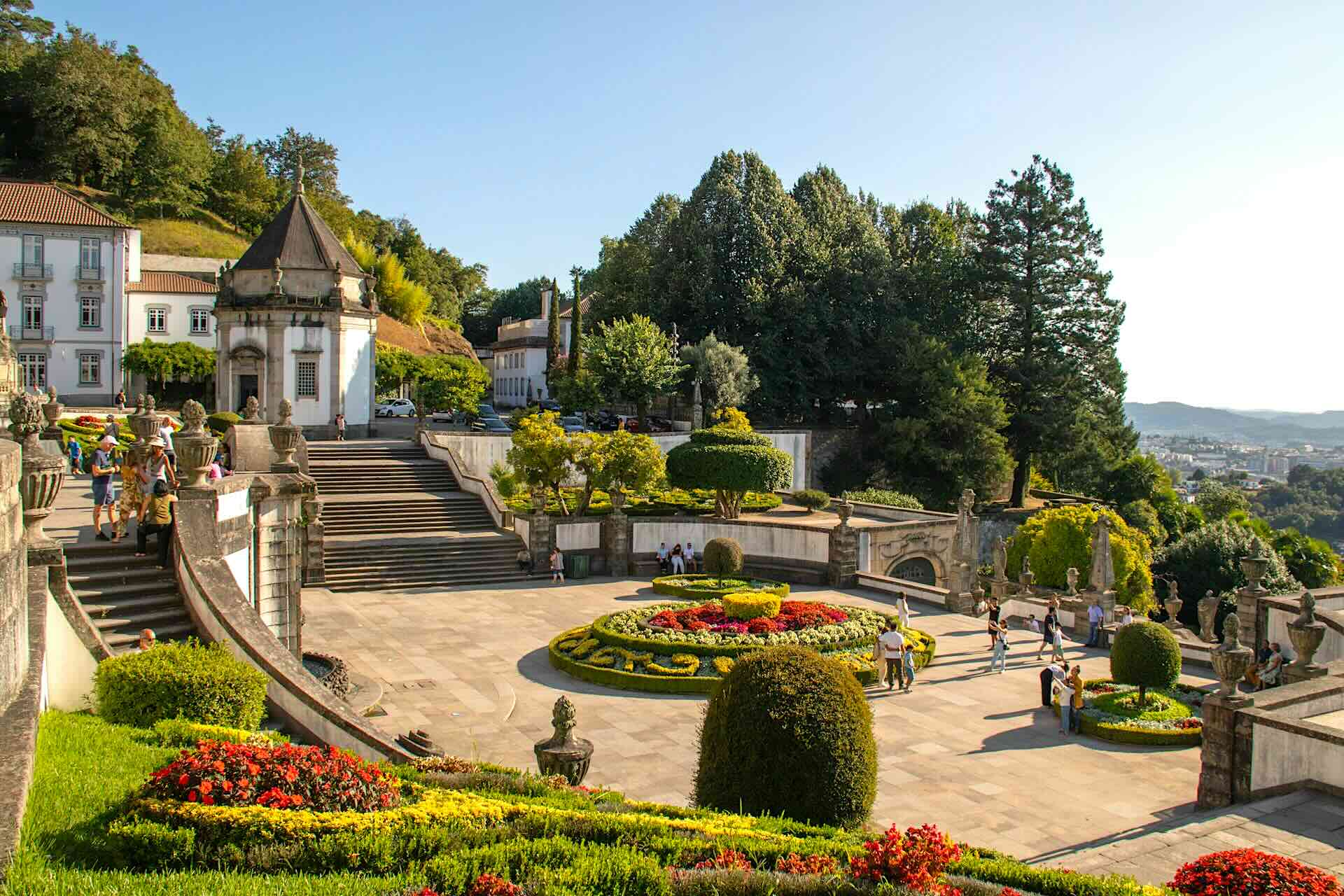
No visit to Braga feels complete without seeing Bom Jesus do Monte. The sanctuary sits outside the center and rises above the city with one of the most recognizable stairways in Portugal. The baroque staircase, lined with chapels, fountains, and terraces, turns the climb into part of the experience.
Bom Jesus is visually striking, but it also reveals something important about Braga. The city’s identity is not limited to its core streets. It extends into hillsides, viewpoints, sanctuaries, and green spaces that frame the urban center. From above, Braga appears broader and calmer, with a landscape that helps balance its density.
The site attracts visitors for obvious reasons, yet it still carries a reflective quality. The ascent slows you down. The symmetry of the staircase, the religious symbolism, and the changing views all create a sense of ceremony. Even travelers who usually avoid major landmarks often find Bom Jesus worth the visit.
Nearby, Sameiro Sanctuary offers another elevated perspective and another expression of Braga’s religious culture. Together, these places deepen your understanding of how the city relates to topography, faith, and visual drama.
Food, Cafés, and Daily Pleasures
Braga is a city where simple pleasures matter. Coffee, pastries, long lunches, and evening drinks all fit naturally into the day. You do not need an aggressive dining agenda here. In fact, Braga is often better when approached with patience.
Traditional Minho cuisine has a strong presence, and meals often feel hearty, regional, and grounded in local habits. Cod dishes, roasted meats, soups, rice preparations, and rich desserts all appear in different forms across the city. Portions can be generous, and many restaurants favor comfort and consistency over reinvention.
At the same time, Braga’s younger population supports more contemporary options. You can move from a classic restaurant to a modern café without feeling a break in identity. That flexibility is part of the city’s appeal. It respects tradition, but it does not trap itself inside it.
Cafés are especially important to the city’s social life. They are places to pause, watch the street, and absorb Braga’s pace. The city invites this kind of unhurried travel. Rather than pushing you from one attraction to the next, it gives you reasons to linger.
Braga as a Base for Northern Portugal
Braga also works well as a base for exploring northern Portugal. It connects easily to Porto, Guimarães, and other parts of the Minho region, which makes it useful for travelers who want a broader itinerary without changing hotels constantly.
This practical advantage matters because Braga itself feels manageable. It offers enough culture, architecture, food, and atmosphere to sustain real interest, but it does not overwhelm. That balance makes it attractive for travelers who want a destination with both local depth and regional access.
Guimarães, for example, offers another historic urban experience nearby, while the surrounding region opens up opportunities for countryside drives, smaller towns, and scenic routes. Braga gives you a strong home base with its own personality, not just a convenient stopping point.
When to Visit Braga
Braga can work across much of the year, but spring and early fall often feel especially well suited to the city. During these seasons, walking is comfortable, gardens look good, and public life feels active without the pressure of intense summer heat.
Religious festivals can also shape the experience in powerful ways. Holy Week, in particular, can bring a deeper ceremonial atmosphere to the city. Travelers interested in Braga’s spiritual traditions may find that period especially meaningful. However, even outside festival dates, the city retains its distinctive identity.
Summer brings more movement and energy, while cooler months can make Braga feel quieter and more introspective. There is no single correct season. The city simply changes mood, and that can work in its favor.
Who Braga Is Best For
Braga suits travelers who care about atmosphere as much as checklist sightseeing. It works for people who enjoy architecture, churches, food culture, and walkable historic centers, but who also want a city that still feels inhabited by local routines.
It is also a good choice for travelers who want northern Portugal beyond Porto. Braga offers a different tone, less internationally polished, more grounded in regional identity, and often more relaxed. That does not make it better than larger cities, but it does make it distinct.
Couples, solo travelers, culture focused visitors, and people building a broader Portugal itinerary can all do well here. Braga may not be the loudest destination in the country, but it leaves a strong impression because it feels coherent and real.
The Lasting Appeal of Braga
Braga stays with people because of its balance. It is historic but not frozen. Youthful but not chaotic. Spiritual but not inaccessible. Lively but still reflective. Very few cities hold those qualities together so comfortably.
That balance gives Braga a quiet confidence. It does not need spectacle to feel important. Instead, it offers texture, continuity, and genuine urban life. For travelers who want a destination with both cultural weight and human warmth, Braga earns its place.