Salzburg, Austria, music, mountains, and baroque beauty come together with unusual ease in a city that feels both grand and intimate. Salzburg is visually elegant from the start, but its appeal runs deeper than church domes, palace façades, and postcard views. This is a place where music still shapes identity, where the old town feels theatrical without becoming artificial, and where alpine scenery frames daily life in every direction. Salzburg offers refinement, but it also offers warmth, rhythm, and a strong sense of place.
Why Salzburg Leaves Such a Strong Impression
Some European cities impress through scale. Others depend on a single landmark or a famous museum. Salzburg works differently. Its beauty is continuous. Streets, squares, churches, riverbanks, and distant mountain views all connect into one coherent experience. The city feels composed, almost like a carefully arranged performance, yet it never loses its human scale.
That balance matters. Salzburg looks polished, but it does not feel cold. It feels lived in. You can admire baroque architecture in the morning, stop for coffee in a small café by midday, and spend the evening listening to music in a setting that feels inseparable from the city’s history. Salzburg does not ask you to separate culture from atmosphere. It lets the two exist together.
A City Shaped by Music
Music is not just part of Salzburg’s brand. It is part of the city’s structure and memory. Mozart’s presence is the most famous example, but Salzburg’s relationship with music reaches beyond biography. The city feels organized around sound, performance, and artistic tradition. Concert halls, churches, festivals, and public spaces all reinforce that identity.
Even travelers who do not arrive with a deep interest in classical music often feel the effect. Music in Salzburg is not hidden inside formal venues alone. It spills into the streets through buskers, festival energy, and the city’s general sense of ceremony. There is a reason Salzburg feels graceful. Its cultural life has trained the city to value timing, presentation, and mood.
The Salzburg Festival adds another layer to this identity. It gives the city international visibility, but even outside festival season, Salzburg retains that artistic seriousness. Music here feels embedded rather than imported.
The Baroque Character of the Old Town
Salzburg’s Altstadt, or Old Town, is the heart of the city’s visual appeal. Baroque architecture defines much of the experience, creating streets and squares that feel rich without becoming overwhelming. Domes rise above narrow lanes. Decorative façades catch shifting light. Church towers and palaces give the city a sense of height and drama.
What makes the old town so satisfying is its density of detail. Salzburg is not just beautiful from a distance. It rewards close attention. Doorways, courtyards, iron signs, arcades, and stone passages all add texture. You do not need to rush from one major site to another. The city reveals itself while you walk.
Getreidegasse is one of the best known streets, and for good reason. It combines historic charm with commercial life in a way that still feels authentic. The street is elegant, but it remains active and useful, not frozen for visitors. That quality runs through much of Salzburg. It is carefully preserved, yet it still functions as a real city.
The Salzach River and the Shape of the City
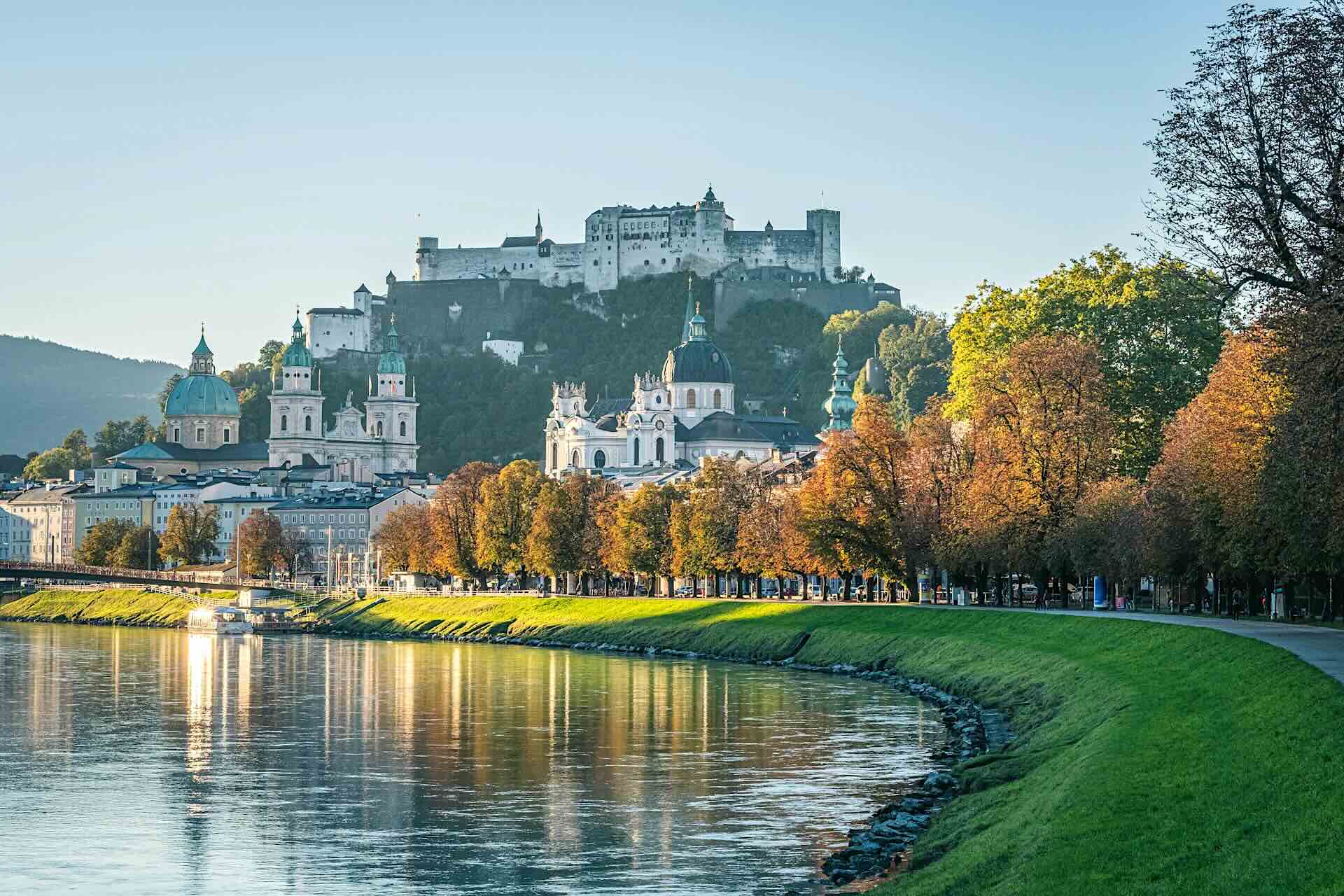
The Salzach River helps define Salzburg’s mood. It creates visual space, reflects the city’s architecture, and adds movement to an otherwise highly composed urban setting. Walking along the river gives you a broader sense of Salzburg’s layout, with the old town on one side, newer districts on the other, and hills rising behind everything.
Bridges across the Salzach offer some of the city’s most memorable perspectives. From them, Salzburg appears almost perfectly staged. Church domes, fortress walls, steeples, and mountain backdrops align in a way that feels cinematic. Yet the river also softens the city. It makes Salzburg feel breathable and open.
This relationship between architecture and landscape is one of Salzburg’s great strengths. The city is not impressive only because of what humans built. It is impressive because those buildings sit within a setting that constantly reminds you of the Alps nearby.
Mountains at the Edge of Everyday Life
One of Salzburg’s most appealing qualities is how naturally mountain scenery enters the experience. In many cities, natural beauty requires a day trip. In Salzburg, it is already there, shaping the horizon and changing the emotional tone of the city.
That alpine presence keeps Salzburg from feeling too formal. However elegant the churches and palaces may be, the mountains remind you that this is also a gateway to lakes, trails, and open landscapes. The result is a destination with unusual range. You can spend one day immersed in art, music, and baroque urbanism, then spend the next moving toward the surrounding countryside.
Even within the city, hills and elevated viewpoints create a sense of connection to the land. Salzburg never feels sealed off from nature. It feels held by it.
Hohensalzburg Fortress and the City From Above
Hohensalzburg Fortress rises above Salzburg with authority, and it changes how you understand the city. From below, it is a dramatic landmark. From above, it reveals the full relationship between streets, churches, river, and mountains.
The fortress gives Salzburg a stronger edge than many similarly elegant cities. Without it, Salzburg might feel purely graceful. With it, the city also feels protected, historic, and slightly formidable. That contrast adds depth. Beauty here is not fragile. It has structure behind it.
The views from the fortress are part of the experience, but the site also reinforces the city’s long continuity. Salzburg is not simply decorative. It has political, religious, and strategic history layered into its appearance. The fortress makes that clear.
Cafés, Dining, and the Salzburg Pace
Salzburg encourages a slower style of travel. It is a city for walking, sitting, noticing, and returning to beautiful places at different times of day. Cafés are central to that rhythm. They offer a way to participate in the city rather than just observe it.
Coffee, pastries, and traditional desserts feel especially appropriate here because Salzburg already has an atmosphere of refinement. Sitting in a classic café fits the city’s character. The experience is not only about the food. It is about pace, setting, and ritual.
Dining in Salzburg often balances Austrian tradition with a polished presentation. You can find hearty regional food, elegant meals, and quieter spots that let the architecture and atmosphere do part of the work. Travelers looking for constant novelty may not find Salzburg as experimental as larger capitals. That is not a weakness. The city succeeds because it knows its strengths and leans into them with confidence.
Beyond the Sound of Music Image
For many travelers, Salzburg arrives with a preexisting image tied to The Sound of Music. That association is understandable, and some visitors enjoy following it. However, Salzburg has much more depth than that single cultural reference suggests.
The city’s lasting appeal comes from its complete identity. It is not charming only because it appears in a beloved film. It is compelling because it combines ecclesiastical grandeur, musical prestige, walkable beauty, and alpine surroundings in one compact destination. Salzburg can feel romantic, but it is not lightweight. It carries real historical and cultural substance.
Visitors who move beyond the familiar references often find a richer city than expected, one with seriousness beneath the polish and daily life beneath the spectacle.
When Salzburg Feels Best
Salzburg works well in several seasons, which is part of its appeal. Spring brings freshness and softer light, which suits the city’s pale architecture and river views. Summer fills the streets with activity and aligns especially well with music programming and long evenings. Early fall can feel especially rewarding because the air turns crisp while the city still feels open and active.
Winter gives Salzburg another personality. The baroque center, church domes, and fortress take on a more dramatic atmosphere when cold weather settles in. Holiday markets and seasonal traditions can make the city feel festive without losing its elegance.
There is no single perfect moment to visit. Salzburg changes mood well. That flexibility makes it easy to fit into a broader Austria itinerary.
Who Salzburg Is Best For
Salzburg suits travelers who want more than landmarks. It works especially well for people who care about atmosphere, architecture, music, and setting. Couples often respond strongly to the city because it feels beautiful without trying too hard. Solo travelers can do well here too, especially if they enjoy walking and spending time in museums, churches, and cafés.
It is also ideal for travelers who want culture without the intensity of a major capital. Salzburg feels substantial, yet it remains manageable. You can absorb a great deal without exhaustion. That makes it attractive for shorter stays, but also for travelers who prefer depth over speed.
The Lasting Appeal of Salzburg
Salzburg stays with people because it feels complete. Music gives it soul. Baroque architecture gives it form. Mountains give it scale. The river gives it movement. Very few cities combine these elements so naturally.
That is what makes Salzburg more than a beautiful stop on an Austria itinerary. It feels like a city where art and landscape still speak to each other. It feels ceremonial without being stiff, and elegant without becoming distant. For travelers who value places with identity, coherence, and lasting atmosphere, Salzburg earns its reputation.
Plan a trip to Salzburg today.